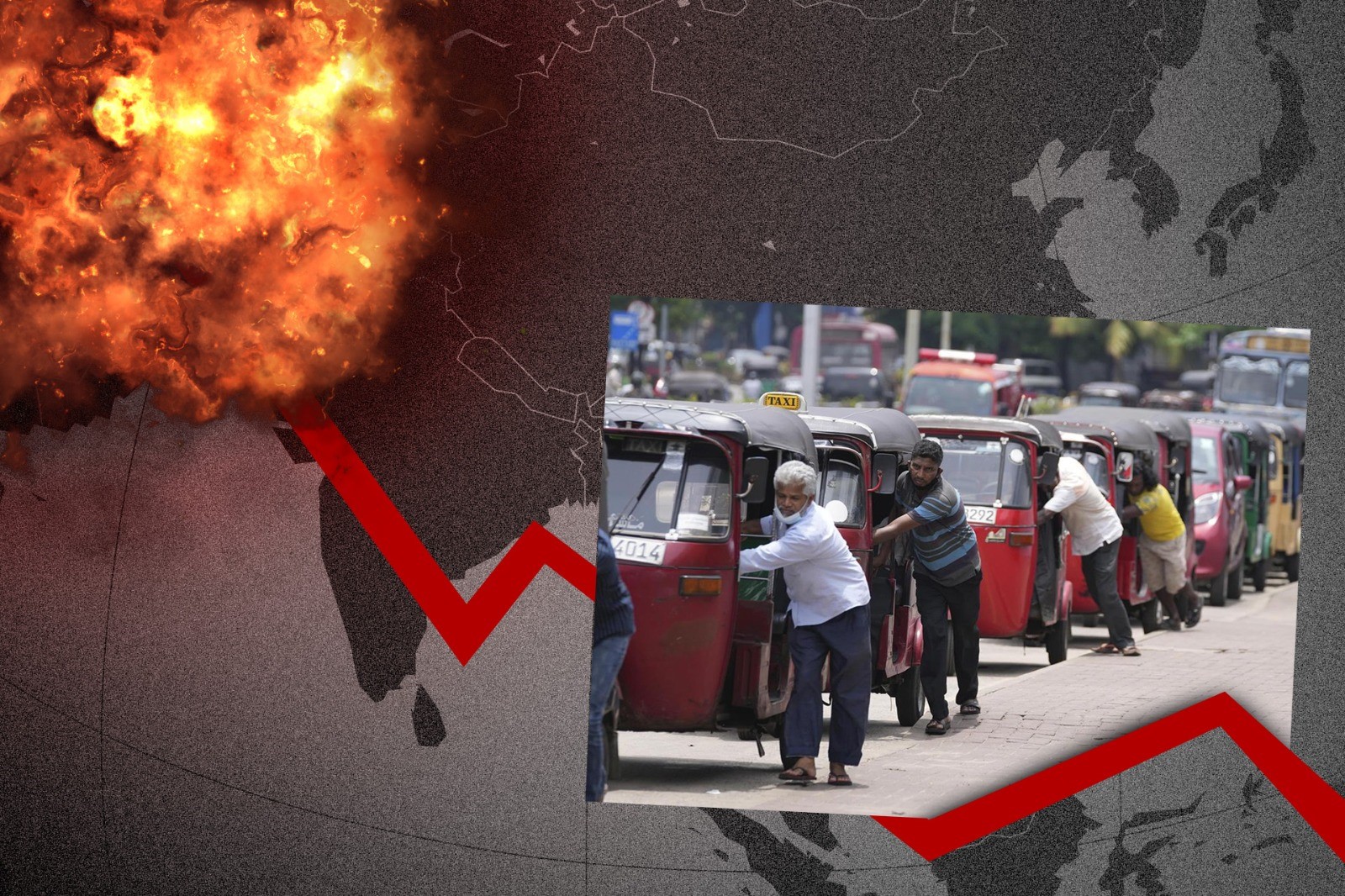
The war in the Middle East, ignited by the US and Israel’s full-scale attack on Iran, has dealt a hammer blow to the world economy. Asia, though bearing no responsibility for Trump and Netanyahu’s reckless adventure, is among the heaviest casualties of the economic fallout. As the war rages with no end in sight, Asian workers must be ready to resist any attempt by the ruling class to make them foot the bill.
Dependence and depletion
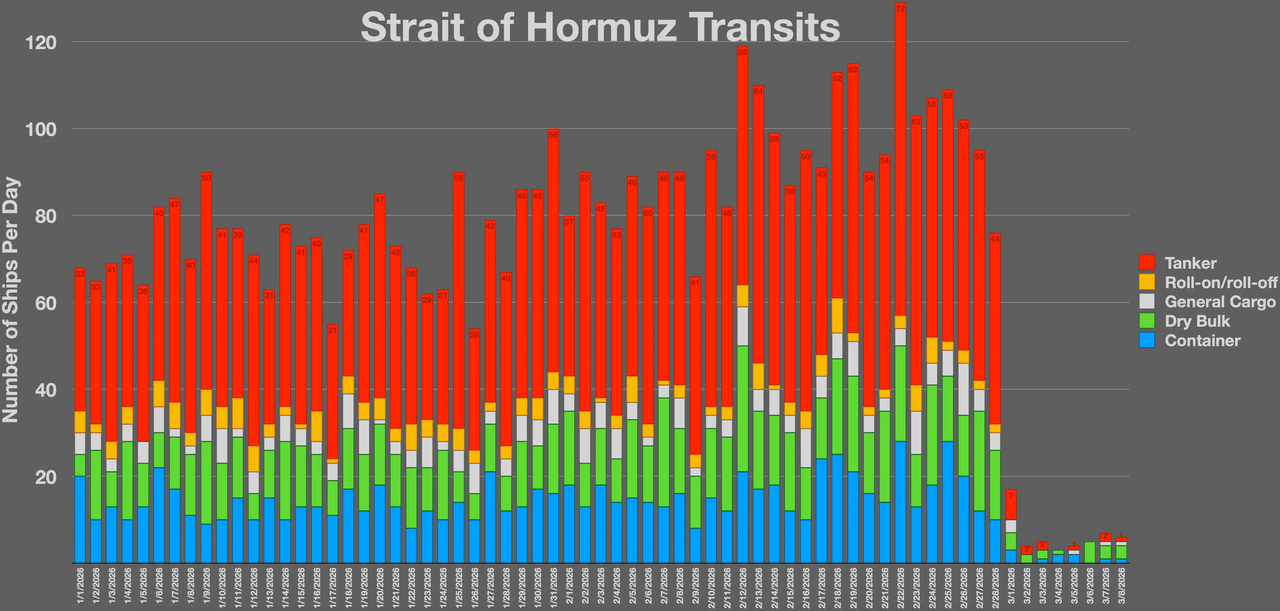
As a continent, Asia is deeply dependent on petroleum, liquefied natural gas (LNG), and many other crucial resources that pass through the Strait of Hormuz. According to The Economist, in 2025 Asia absorbed roughly 87 percent of the crude and 86 percent of the LNG passing through the Strait.
In addition to energy sources, Hormuz is also key for fertilisers and metals destined for Asia, which impact food and industrial production.
It is therefore not surprising that the closure of the Strait is akin to blocking the arteries of these countries’ economies.
South and Southeast Asian countries are especially vulnerable to shortages. A report by the Asia Media Centre indicates that Vietnam only has oil reserves estimated to last fewer than 20 days. Pakistan and Indonesia maintain around 20 days’ worth of reserves, whilst India, Thailand, and the Philippines hold about two months’ worth.
Liquefied natural gas (LNG) shortages pose a major threat as well. Singapore, Thailand, and Taiwan face the greatest risk to their ability to generate electricity due to their heavy reliance on LNG: 94 percent for Singapore, 64 percent for Thailand, and around 40 percent for Taiwan. While they have diversified their suppliers, a prolonged closure of the Strait would massively push up the price of gas from all sources.
Even for countries that have accumulated large strategic reserves of crude oil or LNG, such as Japan, South Korea, Taiwan and Singapore, their deep dependence on importing these fuels still exposes them to the risk of stagflation due to the impact of higher energy prices, especially if the war drags on.
Semiconductor production in Taiwan and South Korea has been threatened due to their dependence on raw materials like Helium, a third of which is processed by Qatar, and Sulphur, a byproduct of oil and gas refinery. This has resulted in a plunge of stock prices for key enterprises like Samsung and TSMC.
The Korean won and Japanese yen have also depreciated drastically against the dollar, further hampering these already stagnating economies.
The consequences for the working class
The sudden choking off of crude oil supplies immediately had a palpable impact on the lives of the working class, as shown by queues at petrol stations in Myanmar, Vietnam, South Korea, and elsewhere, right after Trump announced the invasion on 28 February. Massive queues for cooking gas have continued to spread across India, with waves of hotels and restaurants closing as a result.
Fuel rationing has been introduced in Bangladesh and Sri Lanka, while Nepal and India have mandated rationing of cooking gas. Bangladesh, Pakistan, the Philippines and Sri Lanka all ordered some government workers to shorten the working week, without making it clear whether this will impact their pay. Other state workers in Pakistan, Vietnam, Thailand and the Philippines have been ordered to work from home.
An Indian man vividly compared this to the COVID-19 lockdown and its impact on ordinary people. “At least back then we were getting food. Corona, lockdown, demonetisation, it seems we are the ones who keep seeing all of this,” he told India Today Digital.
Rising gas prices in the Philippines also instantly triggered a struggle on the part of transport workers. There, the take-home pay of jeepney (small bus) drivers is being severely eroded by rising fuel prices. Their union, the PISTON (Pagkakaisa ng mga Samahan ng Tsuper at Operator Nationwide), mobilised for a one-day national strike and organised protests demanding the rollback of fuel prices and the scrapping of the 1998 Oil Deregulation Law.
These Filipino transport workers set an excellent example for the working class across the region. As the war drags on in the Middle East, the ruling classes of Asia will increasingly attempt to shift the cost of the crisis onto the shoulders of the working class.
Workers and trade unions should immediately prepare to fight against attempts to use energy-saving measures as a pretext for wage cuts. Rationing should be carried out under the supervision of workers and communities, and private energy dealers should be nationalised to prevent hoarding and price gouging.
China benefiting from the situation
The one country that is significantly better shielded from this crisis is China. The CCP state has built up a significant strategic reserve of crude oil that can last for more than 100 days without imports, as well as 40 days’ worth of LNG.
Although the blocked Strait of Hormuz still impacts China, especially because of the stoppage of LNG imports from Qatar, China has a far more diverse source of energy imports than most other Asian countries. China’s defiance of western sanctions against Russia and Iran also means that, unlike others in the region, it has alternative energy sources. Iran has reportedly allowed Chinese vessels to pass through the Strait, even while blocking other shipping.
Remarkably, the Americans too have allowed these vessels to pass! Even though they are destined for China, the Americans know if they further restrict the supply of gas and oil heading for any destination, they will only push up prices further. Iran is therefore able to continue trading with relative freedom!
In China, the heavy role that the state plays in the economy also allows a greater share of the rising fuel cost to be borne by the state before it translates into a sudden, unmanageable rise in the cost of living. Rising energy prices are also easing the deflationary pressures that the Chinese economy has been struggling with, according to the Financial Times.
All of this explains why, unlike the rest of Asia, the Chinese economy has so far avoided heavy damage. The MSCI China stock index outperformed the rest of the world’s stock indices by 1.4 percent after the war began. Unlike in South Korea or Taiwan, the energy panic caused by the war did not result in a retreat of international investors from Chinese industries, which continue to be viewed favourably.
All signs show that unless the war drags on longer and causes much greater damage to the world capitalist economy than it is now, China remains in a comfortable position, and can take advantage of the situation. China can easily sell itself as the more ‘reasonable’, ‘responsible’ power on the world stage compared to the US. It can also benefit from reconstruction contracts or better trade deals with Iran when the war eventually ends.
More importantly, China’s hand against the US is strengthened. It can now negotiate the trade war with Trump from a stronger position. As Reuters commentator Jamie McGeever explained, the US’ attempts to exert control over areas China is dependent on for energy (Venezuela, Iran) were partly intended to pressure and weaken it. But, he pointed out that “if this is the strategy, it could backfire if Trump gets bogged down in the Iran war or if he appears to be acquiescing to some Iranian demands to reopen Hormuz.” So far, this is the case.
Militarily, the war has been a major gift to China and North Korea. Trump had to redeploy 2,500 marines and several assault ships away from Okinawa, Japan, to the Middle East. He is also taking several THAAD and Patriot missiles out of South Korea to ease the shortage of missiles to be used against Iran.
This places a question mark over the value of the US as a military ally, and has left the military establishment in Japan, South Korea and Taiwan worried. As former Japanese Defence Ministry official Hirohito Ogi told Bloomberg, “That could have a serious impact on readiness in the Indo-Pacific region, including the defence of Taiwan.”
Excuse for militarism
So far, the governments of Asian countries have more or less unanimously declined Trump’s request to join in on the military adventure to reopen the Strait of Hormuz. The Japanese government is the only country reviewing options for military deployment, probably as a gesture of goodwill ahead of PM Sanae Takaichi’s visit to Washington.
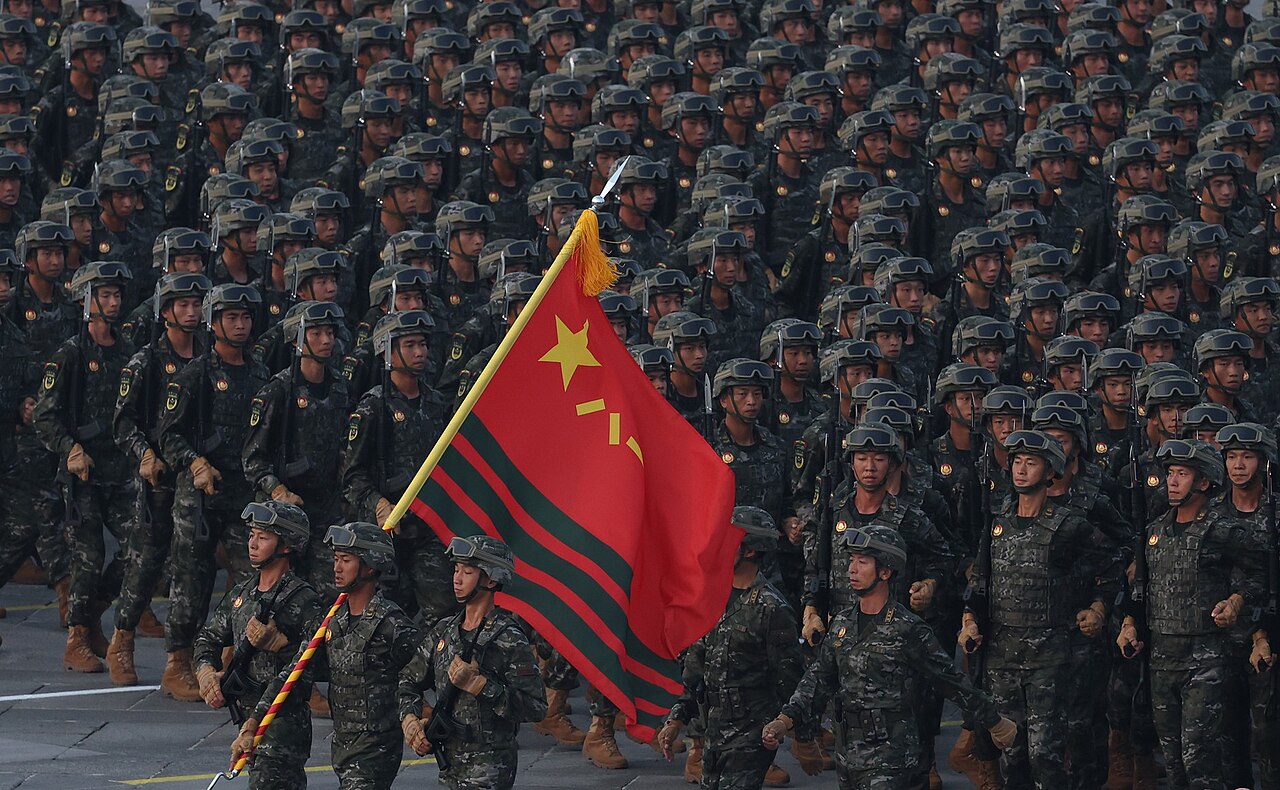
However, the redeployment of military assets away from Asia will intensify militarism in the region.
Trump has been calling on the governments of Japan, South Korea and Taiwan to increase their own military spending and reduce direct reliance on the US military. In addition, there is no guarantee that the US military forces that have been redeployed will return to Asia. As The Diplomat remarked: “The redeployment of air defence systems from South Korea is likely a temporary measure, but it is also a signal. Burden-shifting is coming to East Asia whether Tokyo, Seoul, or Taipei want it or not.”
So far, all of these governments are pushing for a significant increase in military spending.
China, which boosted its own defence budget this month, also took the chance to reaffirm its intention to eventually annex Taiwan, openly promising Taiwan energy security if it were to “reunify” with China. North Korea has also conducted nuclear-capable missile tests in protest of a previous US military exercise and as a show of strength.
Even when the masses are facing potentially catastrophic economic pressure, the ruling class will always place their own interests first.
Workers of all countries must be prepared to oppose any attempt by the ruling class to use the situation as an excuse for increasing military spending on the taxpayers’ dime. If there is money for more bombs and warfare, then there is certainly money for books and healthcare.
Prepare for class war
At time of writing, Donald Trump still appears to have no off-ramp for pulling out of the war, and the Strait of Hormuz remains closed. The pressure on Asia will mount exponentially with each passing week of war, and workers and youth must be ready for an almighty shock.
The sudden explosion of the war has also exposed the utter chaos, irrationality and rottenness of US imperialism in decline and the world system of capitalism.
It has also exposed the utterly outdated nature of the system of private property, the profit motive, and the nation state. In a socialist world with fraternal association of workers’ states, and superabundant, clean, and accessible energy sources available to all, energy production would cease to be a tool for profiteering or geopolitical manoeuvers.
On a capitalist basis, the ruling classes of Asia will do everything they can to make the working class pick up the tab for this crisis, in order to preserve themselves and their interests. We can have no illusion in any sense of ‘national unity’. The working class must be prepared for class war.
- No to profiteering! Nationalise the energy companies under workers’ control!
- For workers’ control of distribution of fuel, gas, and other necessities!
- No to indirect pay cuts! Any reduction in work hours should result in the sharing of the work with no sackings and no loss of pay!
- Down with militarism! All spending must be used towards alleviating the economic pressure! Healthcare not warfare, books not bombs!
- The capitalists who started this war are now profiting off our misery! Down with capitalism!
Original article taken from Marxist.com