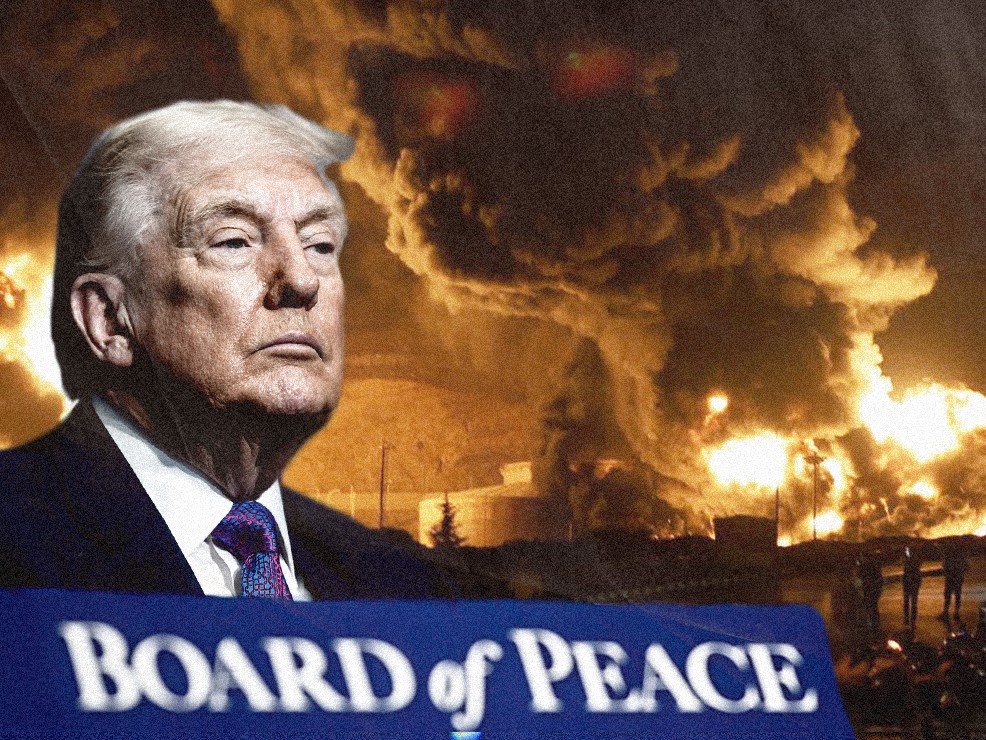
The US-Israeli war on Iran exposes the depth of Australia’s integration into the global imperialist order. Behind the language of ‘security’ and ‘human rights’ lies a ruling class whose interests are tied directly to the global dominance of American capital.
Within hours of the attacks, Anthony Albanese declared that Australia “stands with the brave people of Iran in their struggle against oppression.” The statement offered immediate political backing for the strikes while presenting them as a defence of human rights and international security.
This follows a familiar pattern. From Iraq in 2003 to Libya in 2011, US acts of horrific aggression have repeatedly been presented as humanitarian necessities – regime changes for the good of the masses, and world peace! The rhetoric of democracy and security serves as a convenient cloak for acts that are driven by the interests of imperialist powers.
The government’s response reveals something deeper than diplomatic alignment. It reflects the structural integration of Australian capitalism within US-led imperialist hegemony. As this balance of forces is challenged and the US and their proxies deploy widespread violence, the cracks are exposing the Australian ruling class to a world in crisis. These tensions expose the contradictions of Australian capitalism and will inevitably sharpen the class struggle at home.
Australia’s direct role in the conflict
Despite claiming that Australia is not directly involved in the war, the government has simultaneously confirmed that military assets have been deployed to the Middle East. Foreign Minister Penny Wong has acknowledged that Australian personnel and equipment are being repositioned in the region to help “provide protection against Iranian drone and missile attacks.” Following years of providing cover for the Zionist genocide of Gaza, insisting Israel has the right to defend itself; no such principle exists for Iran!
Australia has repeatedly committed troops to US-led wars, from Vietnam to Afghanistan and Iraq. In recent decades, however, its role has increasingly shifted toward intelligence and logistical support, embedding Australian territory and forces within the operational machinery of US imperialist power. At the same time, Australian military planning has focused on retaining its capacity in the Indo-Pacific, where the ruling class seeks to project its own influence and counter the growing power of China.
At the centre of this network sits the joint US-Australian intelligence facility at Pine Gap in the Northern Territory. Pine Gap forms a crucial node within the global surveillance and targeting architecture used by the US and its allies. Satellite intelligence processed through the facility contributes to monitoring communications and military activity across vast regions of the world, including the Middle East.
In practice this means that even when Australian aircraft are not dropping bombs, Australian territory and infrastructure remain an active part of this latest US imperialist war.
Albanese has confirmed that 3 Australian Defence Force personnel were aboard a US nuclear submarine when it torpedoed and sank the Iranian frigate IRIS Dena off the coast of Sri Lanka.
The government insists the Australians were merely participating in AUKUS training rotations and did not take part in the offensive action itself. But the distinctions are meaningless. Australian sailors were physically present aboard the vessel that launched the attack, demonstrating how ‘hands-on’ Australia has become in the operational infrastructure of US imperialist power. A nuclear submarine functions as a single, integrated system where every station is an essential part of the vessel’s ability to strike. Under Pillar 1 of AUKUS, the explicit goal is “seamless interoperability,” meaning Australian sailors are to be functionally interchangeable with their US counterparts. By providing the personnel necessary to man the vessel during a combat engagement, the Australian state acted as a direct participant in the attack.
Propaganda: from Iraq to Iran
The Albanese government has justified its support for the strikes by citing intelligence linking Iran to 2 incidents in Australia during 2024: the arson attack on Lewis Continental Kitchen in Sydney and the firebombing of the Adass Israel Synagogue in Melbourne.
According to ASIO Director-General Mike Burgess, the attacks were allegedly orchestrated by Iran’s Islamic Revolutionary Guard Corps through what he described as a “layer cake of cut-outs”, involving criminal intermediaries hired to carry out the acts. For the political establishment and much of the media, this narrative has been presented as confirmation that Iran represents a direct threat to Australian society.
Yet even if these allegations are accepted at face value, the logic of the government’s response collapses under scrutiny. The leap from criminal proxy arson to the bombardment of a sovereign country thousands of kilometres away is a staggering escalation. In no other legal or diplomatic context would a domestic criminal investigation justify the killing of civilians in a foreign country. But this is precisely the leap now being made.
The strikes have already been linked to civilian casualties in Iran, including the reported bombing of the Shajareh Tayyebeh girls’ school in Minab, where approximately 165 schoolchildren were killed according to reports cited by UN experts. Yet the Australian government has issued no explicit condemnation of this atrocity. Instead the focus remains firmly on reiterating the supposed Iranian threat and ‘human rights’. Such story-telling plays a familiar role in the lies of imperialist war. As Lenin explained during the First World War, ruling classes do not simply launch wars; they first prepare public opinion through a sustained campaign portraying their rivals as existential threats to civilisation!
Before the invasion of Iraq in 2003, Western imperialists repeatedly insisted that Saddam Hussein possessed weapons of mass destruction and posed an imminent threat to global security. These claims were presented as unquestionable intelligence assessments. They later proved to be entirely false. Yet they served their immediate purpose: preparing public opinion for war.
Today the same stories are once again visible. Terrorism allegations and moral outrage are mobilised to construct a threatening image of the enemy state while the underlying interests driving imperialist aggression remain carefully concealed.
The ideological groundwork for such narratives has been developing for years.Since the so-called ‘War on Terror’, political discourse across the Western world has increasingly framed conflicts through the lens of extremism and civilisational struggle. Lenin pointed out that the portrayal of the ‘enemy’ as an “existential threat” was the primary method used to split the international working class. A quick selection of headlines from The Australian in 2025 spells this out: “A necessary stand against Iran’s lawless aggression on Australian soil” , “The ‘cunning’ regimes setting our social fabric alight.”
This has contributed to a political climate in which conflicts involving Muslim-majority countries are interpreted through a security threat lens. Iran is therefore not presented merely as an economic region to be exploited by predatory US capitalism, but as a direct threat to Australian society itself!
This atmosphere of fear is reinforced by the steady expansion of ‘counter-extremism’ legislation and national security powers in the name of protecting “social cohesion”. As Lenin observed, the ruling class cannot project imperialist power effectively without first securing the “home front” by suppressing domestic opposition.
This has manifested in a flurry of draconian legislation and a marked increase in state violence. The Criminal Code Amendment (State Sponsors of Terrorism) Act 2025 and the more recent Combatting Antisemitism, Hate and Extremism Bill 2026 represent a fundamental illustration of ruling class manoeuvers.
The “social cohesion” the government speaks of is, in reality, the suppression of the working class’ interests through the threat, or actual use, of state violence. Clearly, these laws are not tools for public safety; they are tools for class discipline, designed to criminalise protest, by unashamedly equating dissent with terrorism.
This aggressive legislative tactic is not a new weapon in the capitalists’ arsenal. It is a repetition of the “Howard Doctrine” deployed during the lead-up to the 2003 invasion of Iraq. The Security Legislation Amendment (Terrorism) Act 2002 and the 2003 ASIO detention powers were rammed through to criminalise dissent under the guise of “national security.”
In 2003, the ruling class dismissed the largest protests in Australian history as an “anti-democratic mob” to mask the fraud of WMD intelligence. Today, Chris Minns, premier of the NSW Labor government dismisses anti-war organisers as a “pack of communists” (we would be so lucky!) to mask the material reality of AUKUS and Pine Gap. These historical parallels confirm that the state is, as Engels put it, “bodies of armed men” acting to protect the ruling class from the resistance of the working class.
While officially framed as measures against hate or extremism, such laws inevitably expand the capacity of the state to monitor and suppress dissent during periods of international conflict. And even more inevitably, these repressive actions are brought to the fore at times of military aggression and genocide!
The economic foundations of alignment
Australia’s alignment with US imperialism cannot be explained away with ‘shared values’ or ‘mateship.’ It reflects the cold, material logic of the Australian capitalist class and its position within the global hierarchy of finance capital. For decades, Australian capitalism has been dependent on a continuous inflow of foreign capital to sustain its structural imbalances.
Australia has historically run a persistent current account deficit, meaning that more income leaves the country than returns to it. While Australia exports vast quantities of raw materials such as iron ore, coal and gas, a large share of the profits from these industries go overseas in the form of interest and dividends paid to investors who own major stakes in the economy. This “net primary income deficit” reflects the dominance of global finance capital within key sectors of Australian capitalism. To keep the economy functioning, Australia must therefore have a constant inflow of foreign capital to offset these outflows. In practice this ties the stability of the Australian economy to global finance capital.
This dependence is reinforced by the parasitic character of Australian capitalism itself. Rather than investing heavily in productive industry, large sections of the Australian ruling class prefer the easier profits generated through property speculation and financial markets. Vast sums of capital are poured into global stock markets while manufacturing and industrial capacity continue to stagnate. In this sense, Australian capitalism increasingly lives off financial speculation and resource rents rather than productive development. This naturally draws the system even deeper into the clutches of global finance capital dominated by the US.
Total US investment in Australia has surged to over $1 trillion, granting American monopolies control over key sectors, from mining giants like Chevron and ExxonMobil to the digital architecture of Amazon and Microsoft.
Most insidiously, the Australian state has weaponised workers’ savings via compulsory superannuation – now a $4.5 trillion pool of capital. By channeling these funds heavily into speculative Wall Street markets and dollar-denominated assets, the ruling class has tied every worker’s retirement to the US petrodollar system.
Enforced by US military hegemony since the 1970s, this forces global energy trade into US dollars, recycling capital back into the hands US monopolies. The huge revenues from the oil fields are used to prop up the very markets where superannuation is gambled.
When Iran threatens the dollar or the regional order, it threatens not just the US but the financial interests of Australian capitalists. While the financial oligarchy speculates and profits, the Australian worker is held hostage: their so-called ‘nest egg’ depends on the continued ‘success’ of US imperialist aggression.
Every time an Australian worker is paid, a portion is taken out and put into a capitalist-owned superannuation fund. Because the Australian economy is deemed ‘too small’ for $4.5 trillion in these funds, the big bosses who run these supers ‘export’ the workers’ money to Wall Street to buy shares in giant US companies and weapons manufacturers. Your future retirement is now tied to the survival of US corporate dominance around the globe. Rather than investing in much-needed infrastructure in Australia, the fund bosses prefer the massive dividends from gambling on speculation bubbles, currently underwritten by US hegemony.
The banks remain exposed to US-dominated wholesale funding markets. Any shock to the major capitalist economies, such as the current Middle East war, is felt instantly by workers. The Reserve Bank of Australia’s signaling of a March 17th meeting, with an interest rate hike a distinct possibility, is the domestic face of this instability and inflation.
The Housing Bubble
The Australian housing speculative market is dependent on the US financial system. Because domestic deposits are insufficient to sustain the insanely overvalued scale of Australian mortgage borrowing, the banks must bridge a ‘funding gap’ by borrowing heavily from US wholesale debt markets. This integration ensures that the domestic housing market is directly tied to the stability of US markets. When imperialist escalations in the Middle East cause volatility in global credit markets, the resulting increase in the cost of the borrowing is immediately transferred to Australian households.
By March 2026, this model of debt-led accumulation has resulted in over 1.3 million households being classified as “at risk” of mortgage stress, with repayments and essential spending exceeding 30 percent of their pre-tax income. Despite the severe cost-of-living pressures facing workers, the banking sector continues to report record profits, with the major banks recording a combined half-year net profit of $15.5 billion in 2025. These profits do not represent investment in productive forces, but rather the long-term theft of the value of workers’ labour through interest payments on fictitious capital.
As the US state increases its debt to fund endless military campaigns, the resulting upward pressure on global yields forces Australian banks to raise mortgage costs to preserve their profit margins. For the Australian worker, this creates a condition of permanent indebtedness where the threat of negative equity is used to enforce social discipline.
The magnitude of this dependency is underscored by a residential property market valued at over $12 trillion, a figure that now dwarfs Australia’s annual GDP by more than four times. To sustain this overvalued bubble, the Big Four banks have siphoned $45.6 billion in new overseas debt in the last quarter alone to bridge a funding gap that has pushed Australia’s net foreign debt to a record $1.48 trillion.
The Australian Prudential Regulation Authority has explicitly flagged these “housing-related vulnerabilities” in its March 2026 risk outlook, identifying a dangerous “interconnectedness” where a shock to the property market, triggered by the rising costs of US war debt, would not only lead to mass foreclosures for the 1.32 million households currently in mortgage stress but could simultaneously evaporate the $4.5 trillion in superannuation assets tied to the banking sector’s survival.
Australian capital and the Gulf monarchies
The Australian ruling class is increasingly directly bound to the financial and political order that the US has maintained in the Middle East.
This has been reinforced through the Australia – United Arab Emirates Comprehensive Economic Partnership Agreement (CEPA), which entered into force in October 2025. This was the first major trade and investment agreement Australia has signed with a Gulf state.
The agreement removes tariffs on the overwhelming majority of Australian exports and expands the rights of Australian corporations operating in the UAE. At the same time it facilitates greater investment from Emirati sovereign wealth funds into the Australian economy.
These funds control hundreds of billions of dollars in global assets. In recent years they have expanded their presence in Australia. Investments linked to Gulf capital now stretch from transport infrastructure to large-scale energy developments across the country. Emirati sovereign wealth funds, such as ADQ and Mubadala, have moved beyond passive investment to take up ownership of assets ranging from Sydney’s motorway networks to massive $1.5 billion waste-to-energy projects
By eliminating tariffs on 99 percent of Australian exports and locking in 100 percent foreign ownership rights for Australian firms in the UAE, the Labor government has turned the Australian ruling class into direct stakeholders of the region’s exploitation.
As a result, the Australian capitalist class has an economic interest in the maintenance of a US-led equilibrium in the Middle East. This is yet another incentive for them to rally behind US imperialism’s assault on an adversary in the region.
Australia’s regional ambitions in the Indo-Pacific
Australia’s ruling class are not simply a puppet of US imperialism.
By defending the US-led imperialist order globally, Australia ensures that the US remains able to help secure the Indo-Pacific, a region where Australian capitalism has its own economic interests and regional ambitions.
In effect, Australia’s support for US military interventions functions as a form of strategic down payment. Australia relies on the US military umbrella to maintain the balance of power in its own regional sphere. Australia is an imperialist power in its own right, albeit a minor one.
At the same time tensions between Australian and Chinese military forces in the region have intensified. In March 2026 an Australian Seahawk helicopter operating from HMAS Toowoomba was forced to take evasive action after a Chinese naval helicopter manoeuvred toward it in the Yellow Sea. The incident followed a similar confrontation in October 2025 when a Chinese fighter jet released flares in the path of an Australian surveillance aircraft over the South China Sea.
Such encounters are routinely presented as isolated acts of ‘unprofessional conduct.’ In reality they are symptoms of the deeper imperialist rivalry.
The Indo-Pacific has become one of the central arenas of global imperial competition, as the rise of Chinese imperialism increasingly challenges the dominance of the US and its proxies.
For the Australian ruling class this rivalry presents both risks and opportunities.
On the one hand, it relies heavily on the US alliance to maintain the regional balance of power. On the other hand, the same alliance allows Australian capital to pursue its own ambitions across the Pacific.
Defence agreements with countries such as Papua New Guinea and the Falepili Union with Tuvalu, along with expanding military cooperation with the Philippines and Indonesia, demonstrate how Australia is seeking to reinforce its position as the dominant security partner in the South Pacific.
Within this framework, incidents with Chinese forces are politically useful. Each confrontation is used to reinforce the narrative of an escalating regional threat.
This in turn helps justify the enormous expansion of military spending associated with projects such as AUKUS, as well as the broader militarisation of the Australian economy.
The result is a familiar pattern: imperialist rivalry between major powers is translated into massive public expenditure on weapons systems, while the working class is told that these sacrifices are necessary to defend the so-called “rules-based international order.”
However, behind Australia’s role in this global imperialist rivalry lies a deep contradiction. China is overwhelmingly Australia’s largest export and import market. As of early 2026, the $309 billion trade relationship remains the engine of Australia’s domestic economy. The ruling class is acutely aware that any escalation resulting in permanent damage to this trade would be economic suicide.
This high-wire act of balancing trade diplomacy with China while maintaining its AUKUS obligations for US imperialism in the Pacific is a powder keg waiting to explode. A clash over Taiwan or a miscalculation in the South China Sea, resulting in a full-scale trade embargo, would not just hit miners’ profits – it would hit workers with a higher cost of living overnight. Australia is increasingly reliant on industrial imports from China. A halt on this would paralyse local supply chains.
For these reasons, there are limits to the Australian ruling class’ willingness to play with fire in the Indo-Pacific.
The working class will pay for this war
Under capitalism, the consequences of this conflict will not be borne by the ruling class.
Its wealth is largely insulated within global finance and state intervention. Profits and investment portfolios may even benefit from rising energy prices and instability! In the first week of March 2026, as petrol prices soared for workers, share prices for Woodside Energy and Santos surged by nearly 7% in a single day, with Woodside up 30% for the year so far.
A stark example of this is the state subsidy to big business provided by the Fuel Tax Credit (FTC) scheme. While everyday Australians pay a heavy excise on every litre of petrol and diesel to fund public infrastructure, the largest mining and energy corporations are essentially exempt. In the 2025-26 financial year, the Australian government is forecast to hand over nearly $10.8 billion in these credits.
This means that while a worker pays the full 52.6 cents per litre in fuel tax, multi-billion dollar mining giants like BHP and Rio Tinto receive that same tax as a refund. This massive transfer of wealth ensures their operating costs remain low even as global oil prices spike due to the war in Iran.
Whilst the working class is told that “supply shocks” make interest rate hikes and expensive fuel unavoidable, the ruling class is provided state handouts. They benefit from selling coal, gas, and minerals at war-inflated prices, while the state uses taxpayer funds to insulate their fuel costs.
Instead the burden will fall squarely on the working class. Higher fuel costs quickly ripple through the entire economy, pushing up the price of transport, food and basic goods. For workers already struggling under the weight of the cost-of-living crisis, this means further erosion of real wages and the renewed threat of inflation and higher interest rates.
At the same time hundreds of billions of dollars will continue to flow into obscene military spending. Resources that could be used to fund housing, healthcare and education are instead diverted into the machinery of imperialist aggression.
Labor, the Coalition and the populist right all defend the same interests of these billionaires and bosses. And as always under capitalism, it is the working class that will be forced to pay the price.
The task ahead
The decisive question in any conflict is not the moral character of the governments involved but the class dynamics underlying the war.
The Iranian regime is reactionary and hostile to the interests of workers and youth.
But the overthrow of that regime can only be the task of the Iranian masses themselves. The barbarity of the US/Israeli assault on Iran will do less than nothing to aid this task, and risks plunging Iran into chaos, with the oppressed masses paying the price.
The US and Israel represent powerful imperialist states seeking to maintain strategic dominance in the Middle East. Iran, whatever the nature of its regime, is the target of that aggression, and has the right to defend itself.
Revolutionary communists therefore oppose the imperialist war being waged by US imperialism – the most reactionary force on earth today.
The duty of communists today is to unmask the ‘human rights’ rhetoric of the ruling class and expose its lethal integration into global slaughter. This drive toward war is the only “solution” the capitalists have for the terminal crisis of their system, offering the working class nothing but economic ruin and the threat of catastrophe.
The choice is no longer between versions of the status quo, but between the imperialist barbarism of today or the revolutionary overthrow of the system. We must turn the struggle against war into the struggle against the bankers and warmongers at home. Join the Revolutionary Communist International and help build the forces necessary to secure a socialist future.
The choice is clear: barbarism or the revolutionary struggle for international socialism.