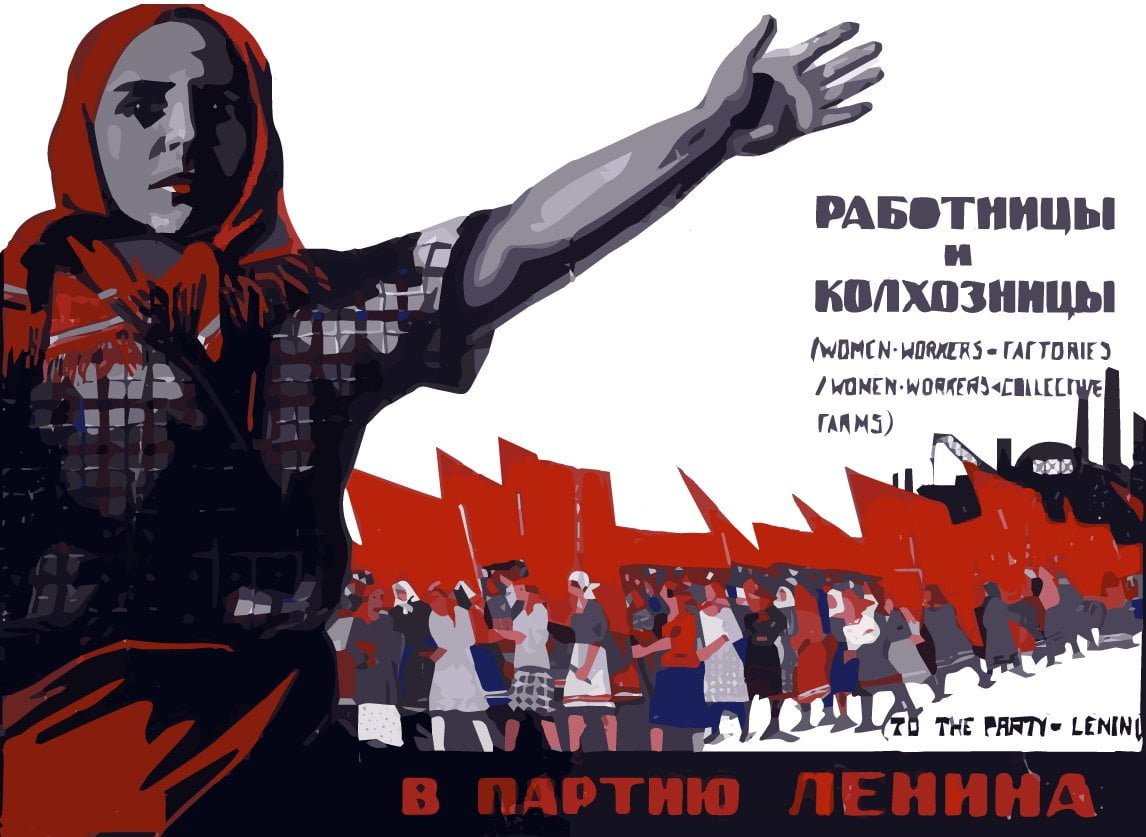
The planet is burning. The seas rise, the air thickens with smoke, and the workers’ human life and soul bend and warp under the crushing weight of capitalist decay. Every sharpening contradiction: the ecological, the economic, the social and psychological – dialectically echoes and reverberates another, because they are born of the same parent: The capitalist system that subordinates that essence which makes us human, to profit. In Australia, as in every capitalist nation, this rot reaches into our most intimate spaces. Behind closed doors, in the homes that capitalism once called “the heart of society,” domestic violence festers and grows. It is not an anomaly. It is a product of the system itself.
We are told that violence in the home is simply about ‘anger issues,’ ‘substance abuse,’ or ‘toxic relationships.’ But this individualisation masks the truth: capitalism breeds violence. It erodes solidarity, isolates individuals, and subjects every relationship to the pressures of survival in a profit driven economy.
“An immediate consequence of the fact that man is estranged from the product of his labour, from his life activity, from his species-being, is the estrangement of man from man“. – Estranged Labour. Economic and Philosophical Manuscripts of 1844. Karl Marx
The family, once romanticised as the refuge from the world, has become a frontline of capitalism’s social crisis.
The Capitalist Family in Decay
Friedrich Engels wrote in ‘The Origin of the Family, Private Property and the State’ that the family, as we know it, arose alongside the private ownership of property. It became the cell through which patrilineal generational inheritance, patriarchy, and the production of the working class, were ensured. Under capitalism, the family’s role is to produce and maintain workers, to bear children, raise them, and replenish the pool of ready-to-exploit labour-power. Importantly, for many workers the family is an island of safety and sanctuary from the grim reality of life and work outside, and many of us have rich and meaningful relationships with those in our family. It is important to note that this is the case in spite of capitalism, not because of it. For many more it is rapidly becoming the opposite – a site of heteronormative dominance, production and control.
In Australia today, the crisis of capitalism has made even the traditional family unit increasingly untenable. The “nuclear family” – one breadwinner, one homemaker, two children, a mortgage, has all but disintegrated with the generations born and raised in recent decades. What remains is the decaying shell of that ideal, propped up by debt and overwork. The cost of living has soared so high that a single income no longer sustains a household. Dual-income families are not a sign of “progressive gender equality,” but of economic necessity, and survival. Every worker must sell their labour power, now often in multiple jobs, just to keep the lights on, and food on the table.
Precarity rules: gig work, casual contracts, twelve hour shifts, endless overtime…
“And it’s go boys, go!
They’ll time your every breath –
And every day you’re in this place –
You’re two days nearer death –
But you go….”
“There’s overtime and bonus opportunities galore
The young men like their money and they all come back for more
But soon you’re knockin’ on and you look older than you should
For every bob made on the job, you pay with flesh and blood!”
– The Chemical Workers Song (Process Man), Great Big Sea
Parents pass each other like ghosts in the hallway, a short word over breakfast or dinner, or a fleeting touch at shift change – dad going to bed, mum getting up. Children grow up learning that exhaustion is normal. The family, once mythologised as a refuge from capitalism, has, for many, been entirely subsumed by it. And in that pressure cooker with stress, insecurity and alienation, violence festers.
The statistics paint a grim picture. In 2023, over 120,000 family and domestic violence assaults were recorded by police across Australia – that is more than half of all assaults! Nearly 90,000 offenders were formally charged or cautioned. Health data shows around 9,300 hospitalisations last year due to violence from a domestic partner. Behind these numbers lie tens of thousands more unreported cases, women, children and men enduring cycles of fear in silence.
Specialist homelessness services assisted almost 60,000 women and nearly 40,000 children fleeing family violence in 2022–23. The national helpline supported over 286,000 callers in a single year. Meanwhile, drug and alcohol harm, deeply entwined with these patterns, remains endemic: one in five Australians reported being harmed by someone under the influence of alcohol last year.
You may think the area you live in is free of these conditions, but you’d be wrong. Your neighbourhood might look nice on the outside, but behind closed doors the crisis is bare and it is stark.
These statistics and incidents are not isolated tragedies. They are the grim outcomes of the capitalist system in decay.
Alienation: Inside and Outside of the Home
Capitalism alienates us at every level from our work, from each other and from ourselves. When people are stripped of community, denied rest, and made to compete for survival, despair takes root. Addictions to alcohol, drugs, and gambling are not moral failures. They are the symptoms of alienation. They are the very human responses to seek temporary escapes from a system that denies meaning and joy. Though a great many of us workers do not commit harm to the ones we love, and though we may not develop one, or several, of these explicitly harmful addictions – many of us do suffer from others, whether it is mindless consumerism, gaming, smartphone, social-media, or pornography addiction. The cruel and brutal effects of alienation are having an increasing impact on a growing layer of workers and youth in particular, as the crisis of capitalism intensifies.
Domestic violence grows in that soil of alienation. Patriarchy is inseparable from capitalism. It asserts itself violently in defence of, and as an expression of, the economic and cultural dictatorship of capital. The home becomes a microcosm of class society: domination, control, hierarchy, the enforcement of power through coercion and the threat of violence. The system depends on this. It needs division in the working class; it needs women subjugated, so that anger is directed against our fellow workers, rather than against the oppressors and exploiters at the top of society.
The limits of Reform
Each time domestic violence rears its ugly head in popular consciousness, the state (usually) promises reforms: new awareness campaigns, tougher sentencing, more shelters, etc. etc. and while demanding these essential services is crucial – under capitalism these will never be sufficient. A symptomatic treatment can only ever be a temporary measure. We see this plain as day with the latest plan by the capitalist state in the ‘National Plan to end violence against women and children’ 2022-2032. The plan, though it locates violence in gender inequality and social attitudes, ultimately fails in addressing material conditions as the root of the problem. It is no good simply to list the problems that everybody knows exist, the point should be to eliminate the conditions that give rise to the poison! Well-meaning reformists and even liberals can point to the harm, but without an understanding of the crisis of capitalism, they fail to answer why our families are collapsing under economic stress, why our communities are fracturing, and why individuals are coping by retreating into apathy, addiction and escapism, or giving into despair. They do not and cannot confront the capitalist conditions that make domestic violence endemic.
Reformism tells us to ‘fix’ the family but the capitalist family cannot be fixed. It must be transcended. So long as the home is treated as a private island in a sea of exploitation, the conditions for violence remain. So long as housing, childcare, and healthcare are commodities rather than being guaranteed to all, people will continue to live and suffer in these conditions.
In a socialist Australia, the home would no longer be an isolated fortress against economic chaos. It would be a node in a vast web of community care and collective life. The basic needs of every person: housing, food, healthcare, childcare – would be guaranteed, not bought. The endless hours of overwork would be cut. Labour would be divided according to what is socially necessary, planned for human wellbeing, not profit.
A Vision of Life Beyond Capitalism
Childcare and elder care could be a mix of communal centred households that are collectively organised and worker-led childcare and elder care facilities – freeing people from the isolated and individual burden of care.
Workplaces, as a model of standard, would be democratically run by workers themselves, ensuring shorter hours and shared decision making. Addiction and mental health would be treated as public health issues, not criminal ones. Community rehabilitation and solidarity networks could replace punitive and carceral systems.
Worker-run education would dismantle the atomising ideologies encouraged by the capitalist system, raising generations free from the burden of alienation and oppression.
High-quality housing would be guaranteed to all: socialised, carbon-neutral and abundant, eliminating homelessness and overcrowding. Families under socialism would not be confined and smothered by economic necessity, but rather nurtured by human choice. True freedom and responsibility would replace fear, dependency, and isolation. An end to the alienation of class society would shift the social and emotional fabric of society in ways we cannot even imagine.
Collective Responsibility vs Individualism
We live in the interregnum Gramsci famously analysed:
“The old world is dying, and the new one struggles to be born.”
Domestic violence, addiction, and despair are not signs of eternal individual human failing, nor merely symptoms of the “moral and cultural degeneration of Western civilisation”. They are part of the death throes of capitalism’s social order, as the current crisis pushes workers into further hardship. This exploitative and brutal system cannot provide stability, safety, or meaning for a growing layer of society. We must break free of this decaying shell of capitalism and build – today! – the revolutionary movement from which the new world will rise – out of the old dead husk.
To end domestic violence, we must do more than punish individuals; carceral justice is not restorative or rehabilitative (nor even alleviative!). No, we must abolish the social and material conditions that breed it. This means revolution. It means a socialist Australia as part of the international socialist revolution across the world.
The struggle for safe homes is the struggle for socialism. The struggle for peace in the family is the struggle for the abolition of exploitation by wage labour, and the exploitation of humanity and the earth itself.
The future is waiting to be built.
We have nothing to lose but our chains, and the violence and sadness that those chains produce.