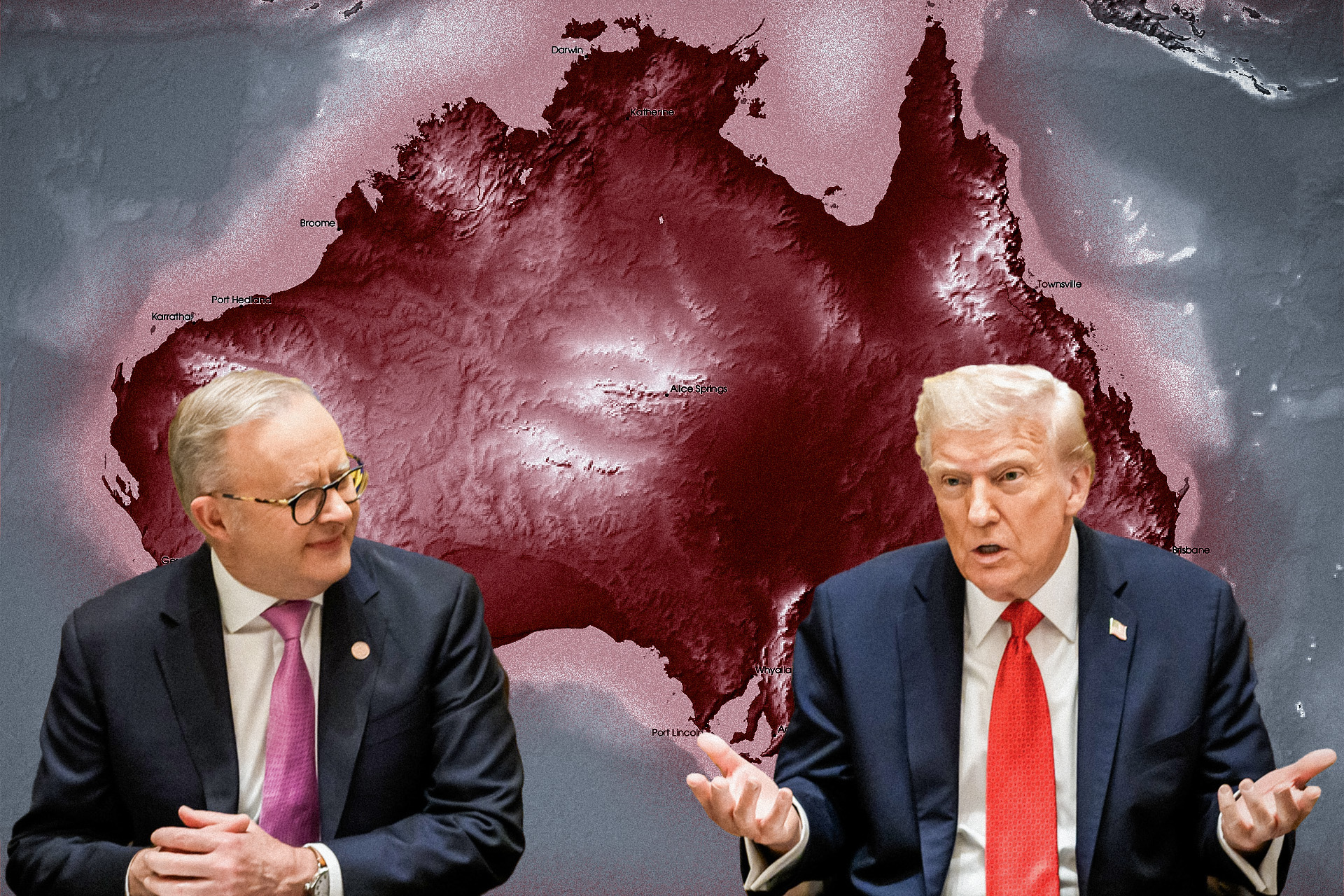
The economic and social consequences of US and Israeli imperialism’s war on Iran continue to rip through Asia and the Pacific. Australia, formerly a bastion of stability in the region, is facing its worst economic crisis in years, and the ruling class is becoming increasingly desperate. What for many was previously unthinkable has now become reality. Alarm bells are sounding across the ‘Lucky Country’.
Originally published on Marxist.com on 16th April 2026.
Yet even as recently as early March – if the capitalist press is to be believed – the outlook for Australia was rosy.
With a debt-to-GDP ratio under half the OECD average, and having dodged a recession after the 2008 crisis thanks to demand for raw materials from China, the capitalist class were only recently celebrating relatively strong economic growth in the last quarter of 2025. One report from late last year even stated that Australia “could soon have the strongest economy in the developed world”.
Now, however, thanks to the fallout of the war on Iran, that is all set to change. In the words of the Bible, “the first shall be last and the last shall be first”. Growth forecasts have been slashed, senior economists are warning of ‘stagflation’ or even recession, and decades-old trading relationships are now being called into question.
Analysts have raised the real possibility of “nightmare scenarios”, in which almost one million Australians could lose their jobs, and inflation could double before the end of the year.
In the words of an advisor to a recent Australian Senate select committee: “I don’t think we’re back to pre-French-Revolution times, but I’m worried about that.”
How did we get here? Or, more to the point, why did the Australian ruling class, who have doggedly supported the war on Iran, seemingly fail to realise its consequences?
Australia on the warpath
The Australian government, headed by the Labor Party’s Anthony Albanese, was one of the first to make a public response to the attacks on Iran. Albanese’s response stands out when compared to his fellow ‘enlightened’ leaders in the supposedly free world. Despite moderating his rhetoric slightly since the economic fallout of the war became clear, Albanese’s approach has largely amounted to uncritical support for US imperialism against Iran, with surprisingly little of the prevaricating flimsiness of many of his European counterparts.
Meanwhile, recently anointed leader of the Liberal Party Angus Taylor went even further than the government in his warmongering rhetoric, stating that this is “not a time to sit on the sidelines” and praising the “decisiveness and moral fortitude of the United States and Israel”.
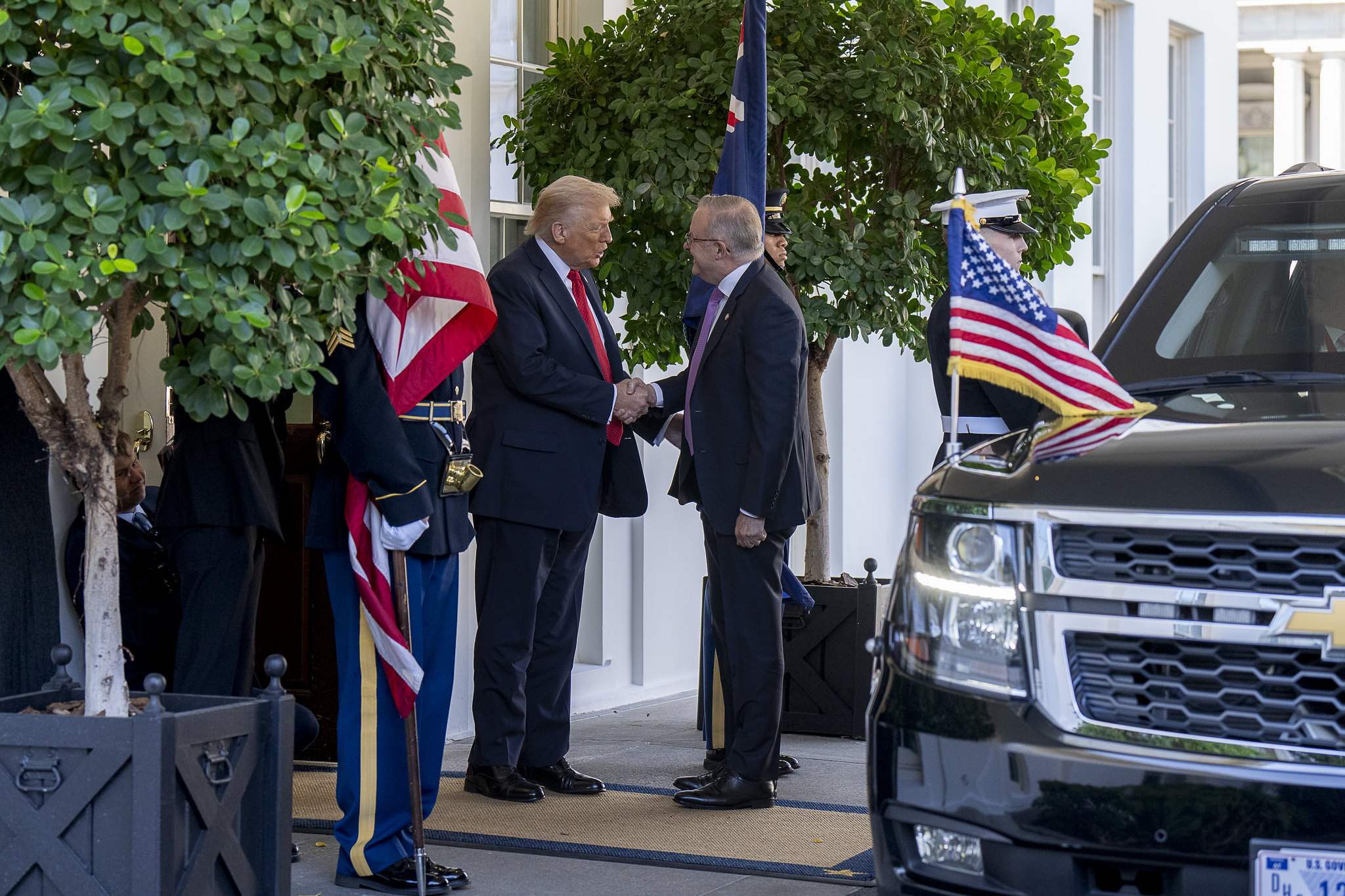
There are two key reasons for the Australian ruling class’ unwavering support for a confrontation with Iran.
Firstly, as we have written previously, the Australian ruling class knows no existence other than as a servile outpost of western imperialism in the Pacific. Schooled in subservience to British interests, the postwar period saw the Australian capitalists tie themselves and their legitimacy to the US. Under the political and military umbrella of the most reactionary force on Earth, the Australian ruling class were free to pursue their own imperialist interests to their immense economic benefit.
Australia has sent soldiers to every major US imperialist adventure of the last 80 years – even those which the US’ European allies were hesitant about getting too involved in, such as the Vietnam War.
The war on Iran has proven no exception. Albanese’s claim that “no Australian personnel have participated in any offensive action against Iran” is a barefaced lie. Three Australian Defence Force personnel were present on the US nuclear submarine which struck and destroyed the Iranian ship, the IRIS Dena, off the coast of Sri Lanka, killing 87 people. The idea that these personnel played no role in the operation – despite being fully trained to operate the submarine as part of the AUKUS security pact’s policy of ‘interoperability’ – is utterly absurd.
In addition, Australia sent a number of air-to-air missiles to Gulf States, deployed a long-range reconnaissance aircraft to the region, and there are credible reports that US military intelligence bases on Australian soil were used to coordinate strikes on Iran. If this does not amount to ‘participation in offensive action’, then it is unclear what does.
Albanese’s right to ‘self-defence’
The Australian ruling class’ history of licking the boots of US imperialism is not enough to explain their gung-ho approach to the war. Of equal importance is Australia’s view of Iran.
Australia has escaped some of the worst effects of the post-2008 crisis. As such, it has not had the type of political, social and industrial tumult seen in other countries. Nevertheless, like everywhere else, broad layers are radicalising. The Palestine solidarity movement gave that a focal point. Australia has seen the largest number of mass Palestine protests of any country except Yemen.
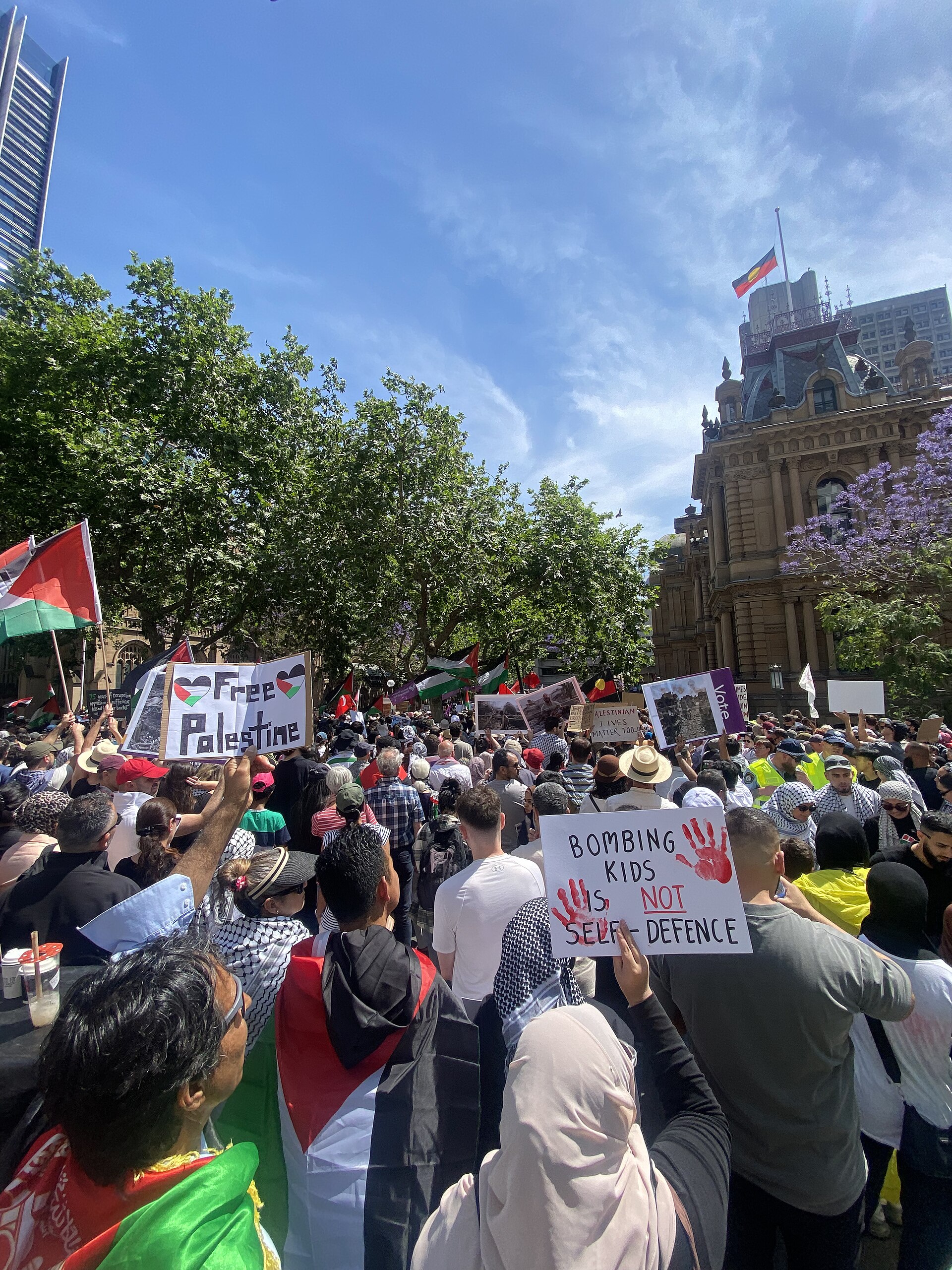
In response to the immense strength of Australia’s pro-Palestine movement following the outset of Israel’s genocidal war, capitalist politicians and the media have done everything in their power to smear anti-genocide protestors as antisemites.
The Australian establishment has gone into overdrive on this. They have taken any and all incidents of antisemitism and have sought to tie them not only to the Palestine movement, but to the spectre of ‘Iranian interference’.
Some readers may be of the opinion that the Islamic Revolutionary Guard Corps, in the midst of escalating tensions in the Middle East prior to the war, had more pressing things to do than undertake a years-long campaign of hiring Australian gang members, arsonists and even graffiti artists to carry out disconnected, amateurish crimes across the country. Yet that is what the government alleges.
On the strength of those allegations, in 2025 the Iranian embassy in Canberra was expelled from the country – the first expulsion of an embassy in Australia since the Second World War.
This set the stage for a vitriolic anti-Iran campaign in the Australian media, which has tied the legitimacy of the Labor government to its ability to appear tough on Iran. Thus, alongside the typical willingness of the Australian ruling class to jump on the US imperialist bandwagon, Albanese had politically backed himself into a position where he had to support the war on Iran.
Absurdly, Albanese’s initial statement on the US and Israel’s attacks on Iran present them as a war of self-defence on Australia’s part:
“Iran [allegedly!] directed at least two attacks on Australian soil in 2024… Iran’s nuclear program is a threat to global peace and security… We support the United States acting… to prevent Iran continuing to threaten international peace and security.”
Yet far from bolstering Albanese’s ailing image, his boisterous support for the war has backfired massively. It is one thing to shoot oneself in the foot, and quite another thing to shoot oneself in the head. From the perspective of Australian economic and political stability, the support for the war is beginning to look a lot like the latter.
An unprecedented economic situation
Despite being an energy rich country, Australia is dependent on imports for 90 percent of its refined liquid fuel. While Australia does not import fuel directly from the Middle East, it overwhelmingly sources it from countries such as South Korea, Singapore, Malaysia, Taiwan and Brunei, which in turn receive their oil from vessels passing through the Strait of Hormuz. As soon as these countries lost access to most if not all of their fuel imports, the same problem was passed on to Australia.
As of early April, over 500 petrol stations across the country lacked at least one type of fuel, and fuel prices across the board have skyrocketed. In an overwhelmingly rural country, whose economy depends on the ability to transport raw materials from mines or farms by road over long distances, fuel shortages present an existential threat.
In passing, despite the country’s dependence on liquid fuel, it is worth emphasising just how unprepared Australia was for an oil shock. At the turn of the 21st century, Australia refined enough petroleum to meet 98 percent of its domestic needs. In less than 30 years, production has slumped by 87 percent, six of the country’s eight refineries have been closed, and the two remaining refineries rely on imports as they are unable to process the largely ultra-light oil found in Australia.
Alongside the decapitation of Australia’s refining industry, the country’s backup oil reserves have been kept astonishingly low. Out of the 32 member countries of the International Energy Agency (IEA), Australia has the lowest oil reserves as a percentage of imports, meeting barely a third of the IEA’s supposedly mandated requirements for oil stockpiling.
These chickens have now come home to roost. In Canberra’s hallowed halls, sweating politicians are breaking glass panels with ‘emergency’ written on them. Energy Minister Chris Bowen has unveiled a hastily formulated plan for “one of the most drastic market interventions since petrol rationing during World War II”.
There is widespread fear in the media of an economic shock comparable to the damage done by the COVID-19 pandemic. This is undoubtedly keeping many capitalists awake at night, as the economic crisis during the pandemic drove the Australian economy into its first recession in nearly 30 years, and caused the largest quarterly drop in GDP on record.
Such an outcome is by no means unthinkable, and in fact is looking increasingly likely, but the implications of such a downturn would shake Australian society to its core.
‘Bad surprises’ on the horizon
As a major producer of raw materials, Australia’s economy has long depended on stable trading relationships, particularly with Asia. As a result, the ruling class has fought for free trade, minimal tariffs, predictable trading relationships etc.
Faced with economic catastrophe, however, the Labor government is tearing up the economic and political orthodoxy that helped stabilise Australian capitalism for decades.
In a frantic attempt to guarantee oil imports from Asia, Albanese has been threatening to leverage Australian exports in order to keep fuel flowing. Japan has been a particular target, given that the country imports 40 percent of its liquified natural gas from Australia. But a euphemistically named ‘fuel-swap deal’ is little more than an attempt by the Australian ruling class to blackmail some of its most important trade partners.
The growing international tensions around Albanese’s efforts to ensure energy supplies have become especially clear in the response to his threats to impose new taxes on the oil and gas industry. In a particularly strongly worded statement, the Japanese ambassador said:
“In [the] Japanese business dictionary, there’s no word called ‘good surprise’. Surprise, in the Japanese business dictionary, it’s always bad. If there’s a retrospective taxing or something, I think that is really bad news.”
It is hard not to see the irony in Foreign Minister Penny Wong’s claim that Iran is “weaponising” the Strait of Hormuz by blocking shipments of oil. This is precisely the same policy that the Australian government is currently pursuing with its exports!
The key difference, however, is that while Iran is using the oil crisis to undermine the war effort of its enemies, Australia is weaponising trade against its own supposed allies. This is the same cynical, Trump-esque wheeling and dealing with reckless disregard for trade relations that the Australian capitalist class has railed against for years.
If Albanese chooses to give his Asian trade partners a few ‘bad surprises’ over the coming weeks, it is not hard to see how the carefully cultivated trade networks of the postwar period could quickly unravel. Even a marginal slide in trade relations could severely compound what is already a dire outlook for the Australian economy in the coming period.
Drongo economics
In a panic-fuelled article titled ‘Let’s not adopt drongo economics to deal with high-priced fuel’ the Sydney Morning Herald’s senior economics correspondent notes:
“It’s taken just a few days for some utterly terrible ideas to be proffered as ways to deal with the inflation fallout from the war against Iran… if there’s a dumb idea, it’s being embraced by people who should know better.”
This is an apt description, but it misses the central point. With the outbreak of the war on Iran, the Australian capitalist class has been enthusiastically dragged into uncharted and dangerous waters, where every turn they make will be a wrong one.
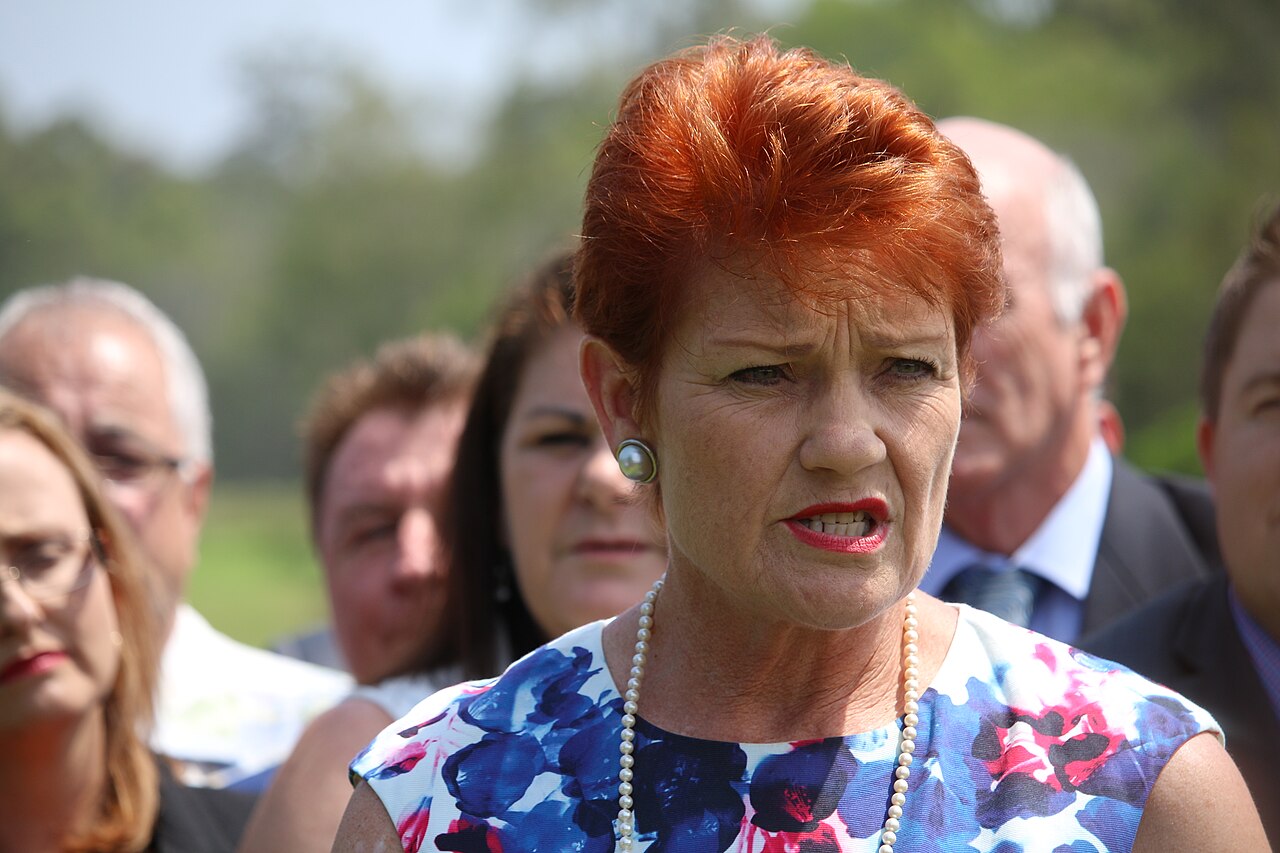
This could not have come at a worse time for them. The two-party system has entered a terminal crisis. The recent South Australia state election saw Pauline Hanson’s insurgent right-populist party skyrocket from less than three percent of the vote in 2022 to 23 percent today. Almost all of their support was sucked from the crumbling Liberal/National Coalition, reducing the traditional party of the Australian bourgeoisie to a humbled spectator of its own death agony.
Events are now unfolding in Australia that the ruling class have for decades said were impossible. The stable two-party system with the stable trade relationships of the past appears increasingly unsalvageable.
In a speech intended to calm the nation’s nerves, Albanese recently stated that “the months ahead may not be easy… these are uncertain times.” The ruling class’ palpable fear is a recognition of its weakness, and the working class’ resentment is perhaps the only thing in Australia with a reliable source of fuel.
As the crisis develops, an unprecedented shift in the consciousness of the working class is all but unavoidable. The task of communists is to concretise this polarising mood into a revolutionary party, precisely to help ensure that the months ahead are not easy for Albanese and the rotten capitalist establishment.