

AI is seeing a huge growth of investment due to stagnant growth in the global economy generally. It is largely an attempt by industrial monopolists to lower the cost of production and remain competitive as the global market marches towards decline. The short-sighted nature imposed by private ownership and competition leads our economic overlords not to actually solve the crises, but to put off the effects until a later date, ‘kicking the can down the road’. Contradictorily, the massive investment undermines the very consumer base these profits are realised from by cutting jobs in the pursuit of profit and thus reducing the purchasing power of the average worker, not to mention the inflation eroding real wages due to its lack of meaningful use to the economy.
While most other sectors in Australia are facing stagnation (construction, manufacturing, agriculture, etc,), AI is being presented as a new horizon of growth and prosperity under capitalism. Companies and governments are pouring hundreds of billions into AI because it represents a major technological shift that promises to automate tasks, drive ‘massive productivity boosts’, and secure a dominant position in the future economy.
There are two key factors responsible for the avalanche of funding:
The promise of ‘hyper-productivity’ is core. Our present boom hinges off the belief that large language models and machine learning can dramatically increase worker output across industries, from software development to customer service and scientific research. This is causing tech giants and venture capitalists to fiercely compete for market leadership. Companies are investing aggressively because they are terrified of falling behind their rivals, being sidelined, or allowing a competitor to capture the next era of computing. Many shareholders view AI as a primary method to scale operations while keeping labour costs in check. The potential to automate routine tasks, handle customer inquiries, and streamline operations offers massive long-term margin benefits for major enterprises.
National and geopolitical security explains another large factor behind the AI revolution. Beyond the corporate sector, sovereign governments are spending huge sums on AI. The technology is becoming a critical component of modern defense and intelligence, making dominance in AI a race for geopolitical supremacy. Militaries are rapidly integrating AI ecosystems to process intelligence, compress targeting decisions that once took days into seconds, and coordinate automated, uncrewed weapons systems across land, sea, air, and cyber domains. War remains a profoundly profitable industry, no matter the human cost.
Amongst this sharp incline in investment, Australia has emerged as a hotspot to house the data centres which facilitate the necessary computing power for the technology to function. In the midst of this surge in investment, large-scale Australian landowners and capitalists have played to the strengths of the continent and are selling out healthy land and domestic labour power, mostly to foreign investors. For a pretty penny, these magnates are jeopardising our future for their own short-term gain. The geographical position within the Asia-Pacific region, stable regulatory environment, ample land and renewable energy potential are among the reasons investors are homing in.
There are currently 162 operational centres with 90 more in the pipeline. The projected builds account for a massive 13% of national GDP, an upturn comparable to the historical mining boom. Multinational tech giants like Amazon, Microsoft and Google are spreading their tentacles, largely responsible for funding surveys and leasing massive land plots in the run up, asserting more and more control over the technology and intelligence sectors.
So what are the implications this has for working class people and the environment?
Economic cause and effect
Very few workers believe the hype that the AI revolution will bring the world economy back to stability. The truth is that the technology itself is not the issue; the problem at hand is the restraints imposed by private ownership over society’s productive property. Instead of a rational plan to utilise AI with consideration for social need and environmental protection, we are presented with an erratic explosion and large-scale investment by a handful of multinational corporations. Workers are rightfully fearful for their job security and the health of the planet.
As Marx explained, the historic justification for a certain set of property relations is its ability to develop the productive forces, and once that progressive relation fulfills its role, it turns into its opposite and becomes a straitjacket to further progress. We can pin-point WWI and the Russian Revolution as being the warning shot of this process. The capitalists, however, have been able to prolong this epoch of decay and retain their privileges and positions due to a number of historical factors: the post WWII boom, the opening up of China to vast foreign investment, the ‘digital revolution’, etc.
But the bourgeoisie has seemingly chased its tail into every corner of the globe. Markets are saturated, growth is largely stagnant, inflation erodes real purchasing. The ‘AI revolution’ is the newest explosion, but the projections for its real potential to provide a new lease on life and develop productivity are dim. Our present explosion is far from being well received in the eyes of the masses; a ‘Luddite-esque’ reaction is the pervading feeling, correctly seeing the technology as a threat to job security and the environment.
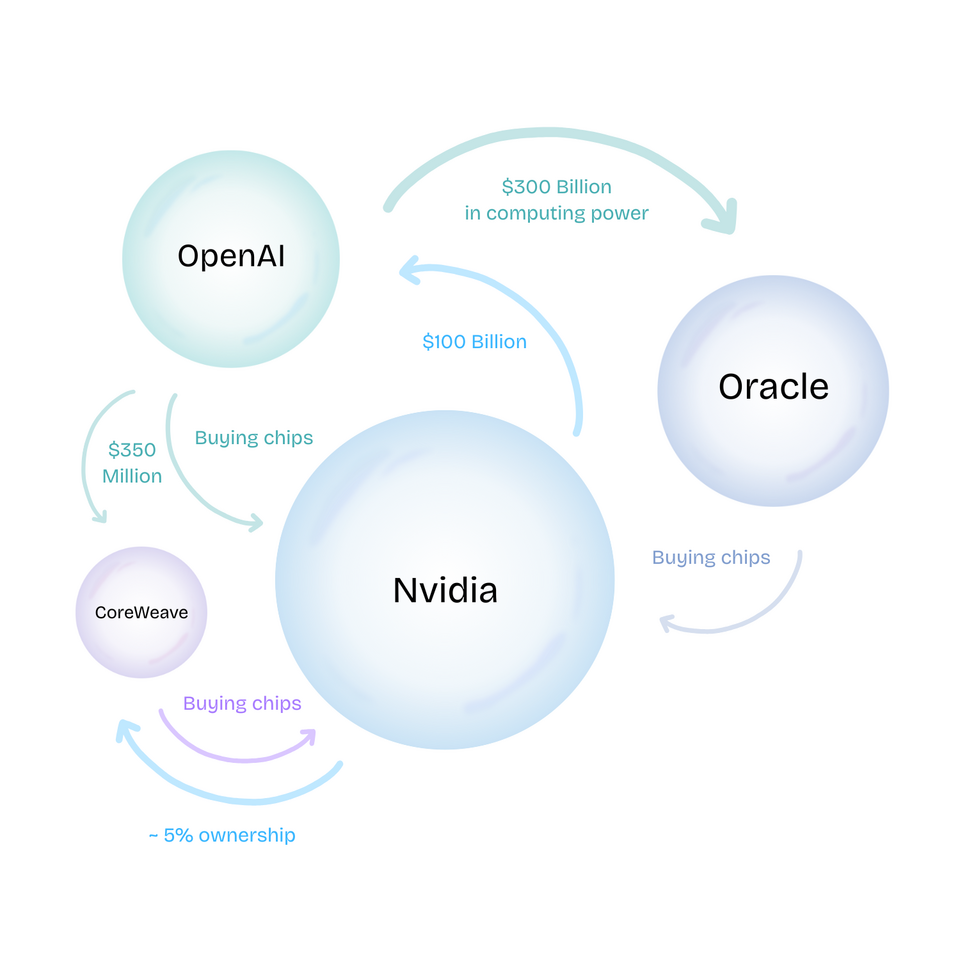
Much of the global economic ‘growth’, as in Australia, is attributed to the AI boom. The thin veneer of hyperscale investment is masking deep stagflation as a whopping 17% of all private investment this year has been thrown at this technology. The bubble is reaching concerning levels as tech firms are engaging in a circular flow of investments that are artificially inflating the value of their stocks. Historical parallels are always conditional, but the similarities between what we are seeing today and the dot-com bubble of the 90’s-00’s is rightfully sparking discontent.
The tech is projected to boost Australia’s economy by $115-$142 billion annually by 2030, primarily through productivity enhancements in finance, professional services, and healthcare. It is not yet causing widespread unemployment but the potential is certainly evident. Many are asking themselves where all this ‘prosperity’ is supposed to be directed. Will we see public infrastructure upgrades? Inflation tackled? Wage rises? After years of the government – no matter what party is in power – gaslighting the Australian populace into believing they are on our side, it is difficult to believe these claims.
For a government always harping on about sovereignty, they are bending the knee at the drop of a hat for their US counterparts, but to little surprise as hypocrisy has been the cornerstone of the Australian ruling class since its inception. American companies do not directly own a majority of the physical data center buildings in Australia, but they hold a massive share of the country’s total computing capacity through ownership and long-term mega-leases. Major US tech giants own a significant chunk of Australia’s physical infrastructure. Amazon Web Services (AWS) owns approximately 14.5% of the physical facilities, followed by Microsoft at around 10.6% and Equinix with 5.4%.
This concentration of control has sparked national debates. Economists have noted that massive capacity investments (which will make up a large portion of a $155 billion investment pipeline) are heavily dominated by US tech giants, meaning a large share of the technology profits, intellectual property, and hardware expenditures ultimately flow back overseas. Sovereignty has never mattered to the capitalists; investments are constantly spilling overseas from all of the big world powers to expand their capital. The real concerns lay elsewhere.
Prime Minister Anthony Albanese recently made a speech at the University of Sydney, announcing the government is moving to centralise the oversight of AI expansion and will force data centres to ‘minimise’ water usage and fund their own power supply under mandatory national rules. He claimed Australia has a narrow window of opportunity to establish AI’s “social license”. While a centralized framework could boost investor confidence by offering unified rules, mandates regarding strict copyright laws and local energy generation could pose massive barriers for investors. What remains regardless is that working people are kept out of the discussion; it is left to the ‘professionals’ to square the circle and reconcile the interests of profit and environmental health.
Regional expansion and health concerns
Due to the need to leach off of existing infrastructure, it is cheaper to build in fringe residential areas than further inland, causing many issues for locals, often without any meaningful consultation or consideration for flow on effects. The state is streamlining approvals to accommodate for the boom, moving away from subsidies and towards coordinated planning within the oligarchy. Continuous noise from cooling fans and backup diesel generators, air quality impacts, and light pollution are frequently disrupting the day-to-day lives of those nearby.
With over 160 operational and 90 more in the pipeline, data centres are popping up on a scale never seen before. While inner-city sites are being expanded, mega-hubs are clustering in the western fringes of Sydney and Melbourne, or more recently in regions offering unique power advantages like the Northern Territory (e.g., Project Ares). Projects are being rushed through; Federal and most state energy ministers are attempting to force new data centres to offset their electricity use entirely with renewable energy investments.
In the event of a power outage, lithium-ion batteries and diesel generators are stored onsite. Lithium-ion stores a massive amount of energy but can pose severe fire and explosion risks. Mixed with onsite diesel fuel, the potential for disaster is extreme. This mixture is only allowed without consultation with emergency fire services due to a loophole; diesel is ‘flammable’, not ‘combustible’. All in the name of profit…
Diminished air quality as a result of emissions are high on the ladder of hazards. Unplanned outages or routine testing of on-site diesel backup generators release fumes and particulate matter, exposing nearby households to poor air quality and concentrated pollution. We’ve already seen the effects of this in the U.S. A report from Save the AI shows that by 2030, air pollution driven by data centers is projected to cause up to 600,000 asthma-related cases and 1,300 premature deaths annually! To put this in perspective, the annual public health burden of these emissions is estimated to exceed $20 billion by 2030.
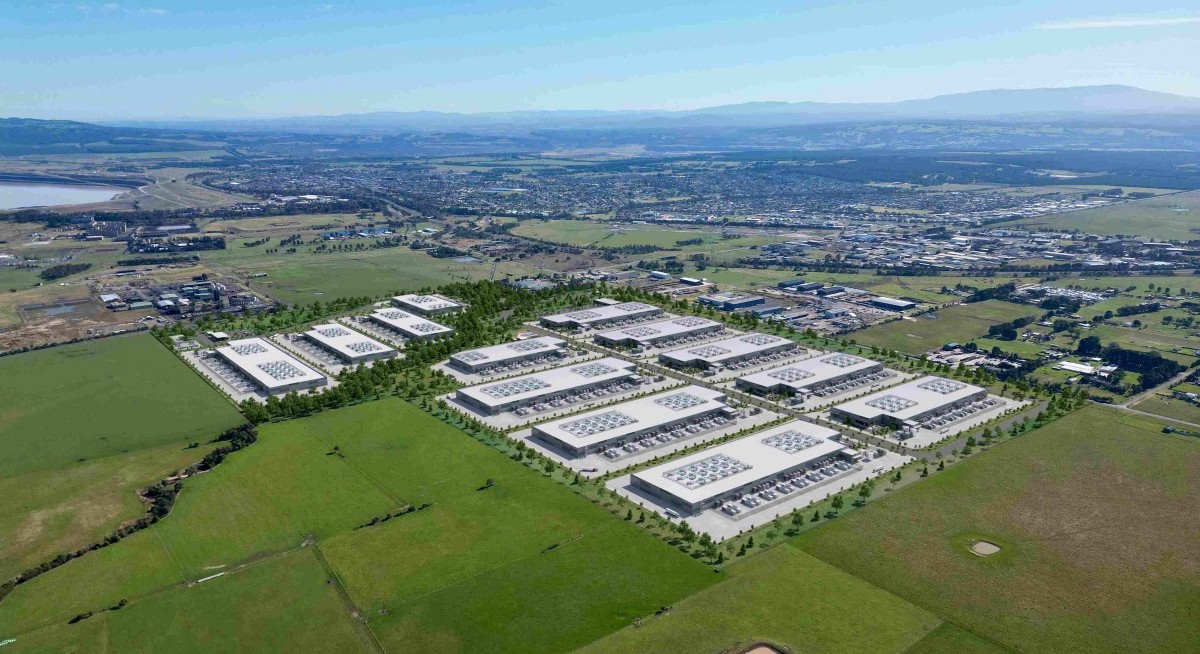
Noise pollution is proven to cause negative health effects, disrupting crucial sleep patterns and inducing anxiety, and due to their frequencies, can even do so when not audible to the human ear! The industrial cooling systems and heavy machinery running continuously generates constant, low-frequency hums. This lack of consulting with those subject to flow on effects, as well as unsustainable – yet profitable – equipment being used, would all be rendered obsolete with a democratic central plan of the economy and direct accountability for those with decision making powers.
Environmental impact
Alongside health risks, the environment at large will undoubtedly take a hit as a result. Noise, smoke and light pollution, substantial heat emissions, as well as massive water demand, means these silicon jungles are like a sinkhole draining the life around it. An average facility can consume as much electricity as 100,000 households and millions of litres of water daily, straining local grids, accelerating carbon emissions, and worsening water scarcity.
The production necessary for their construction and operation reaches far beyond what one might perceive upfront. Continuous upgrading of servers and hardware generates millions of tons of e-waste, while the manufacturing process relies heavily on extraction of rare earth metals, an already arduous process. Because power often comes from fossil fuel-heavy grids, soaring computing demands are slowing the already unfeasible transition to renewable energy.
Globally, datacentre power demand is growing four times faster than all other sectors, according to the International Energy Agency, and is on track to exceed Japan’s electricity use by 2030. In Australia, the energy market operator expects data centre energy demand to triple within five years, surpassing the electricity used by the nation’s fleet of electric vehicles by 2030. Consumer software that generates text, images and videos are uniquely energy inefficient due to the vast datasets and computational strain of pattern-matching. Asking a chatbot a question consumes a great deal more energy than finding the answer via simple web search or calculator. It adds extra demand for no good reason.
The contradiction lies in why investments are made in the first place. Capital is outlayed not for the general need of society, but with the sole intent of making a profitable return. What this means for such a feeble technology amidst a global stagnation is that many corners have to be cut in order to remain profitable. Developers are cutting corners. Avoiding coolant cycle systems, opting to swallow vast amounts of fresh water instead, tapping into the main electricity grid instead of renewable self-reliance, pushing prices up for local workers all while cutting their own costs.
Security and military
Setting aside the ridiculous content generated by this tech, perhaps the most sinister of all is its integration into the imperialist war machine. AI fundamentally transforms ‘defense’ operations by processing vast amounts of intelligence, optimizing logistics, and enabling autonomous weapon systems. Global spending is rapidly scaling up, driving real-time threat detection, advanced wargaming, and drone swarm coordination, reducing warfare to a matter of screens, joysticks and buttons, as observed with the Ukraine-Russia war.
As alliances like AUKUS further entrench themselves in the face of rising militarism, the Australian ruling class is shackling the nation to the US state, increasing the commitment of troops and infrastructure like the infamous Pine Gap facility. The coalescence of this technology and rising geo-political tensions is understandably leading many down the road of doomerism.

Because lives are on the line, governments are positioning themselves to appear as ‘above board’, supposedly abiding by agreed rules of engagement. This all means absolutely nothing to the average worker as this glaring hypocrisy has been ruthlessly exposed by the Australian ruling class’s complacency in Israel’s genocide on Gaza. Engaging in these activities is only adding fuel to the fire within the Australian working class as discontent rapidly grows.
Australians now view AI as the leading threat to security, surpassing traditional concerns like military conflict or climate change (although they are all deeply interconnected). The primary areas of concern include AI-enabled cyberattacks, sophisticated scams, critical infrastructure vulnerabilities, and foreign interference. The legislative bureaucracy is struggling to keep up with developments as consumer-level threats such as deepfakes, voice cloning, and “nudify” apps contribute to the ever-alienating social system we live in.
It goes without saying that working people have absolutely no interest in militarism and war. Our struggle for privacy rights and against the ramping up of military expenditure requires a linking up of the workers and oppressed of all countries in an independent fight against capitalism.
Grassroots resistance: expropriate the parasites!
Many have sought to take matters into their own hands, some even correctly linking the struggle against this blind expansion to the need to overthrow capitalism as a whole. The present expansions taking place at the expense of the 99% is preparing the ground for open class struggle. Resistance to AI in Australia is growing rapidly, driven by widespread distrust regarding job security, corporate overreach, and the environmental drain of data centers.
Local groups and high school students have organized protests against the construction of massive hyperscale AI data centers. Creators, writers, and artists are heavily resisting the unlicensed scraping of their work to train AI models. Citizens are increasingly campaigning to “opt out” of having their personal data harvested by tech companies, and some are actively using data poisoning tactics to protect their digital privacy.
There are no arguments that hold water pointing towards allowing the profiteers to wreck our environment and undermine our social relations any longer. A technology that could slash working hours to free up time for leisure and personal development, open up avenues for scientific and medical breakthroughs, remains concentrated by a handful of monopolists. With them, it remains a method of warfare; both psychological and physical.
For a world in which this incredible technology can be utilised according to the needs of the people and the planet, it must be expropriated from these parasites. Only a democratically planned economy can do so; one which places the administration and monitoring of society’s productive forces into the hands of the people and their own elected institutions, and which allows no secrets to be made behind closed doors in the name of private gain at the expense of the many.