
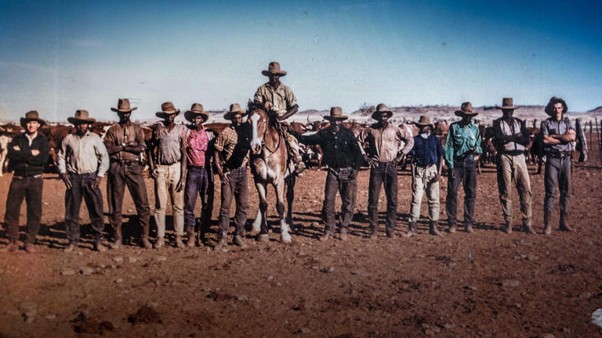
August 23rd marks the 60th anniversary of the Wave Hill Walk-off where 200 Indigenous cattlemen, domestic servants and their families went on strike and walked off the Wave Hill Cattle Station in the Northern Territory (NT), led by Gurindji man Vincent Lingiari.
The reasoning behind this was due to wage inequality- although ‘wages’ isn’t such an appropriate term for payment in meager and insignificant rations. Earlier that year in March, the Commonwealth of Conciliation and Arbitration Commission had ruled that there should be no wage disparity between Indigenous and non-Indigenous workers. The proprietors of Wave Hill Cattle Station- UK multinational business company Vestey Group (original Vestey Brothers and now Vestey Holdings)- did not uphold this ruling and continued paying their Indigenous workers in rations.
The overseers at the time expressed that they ‘could not afford’ to pay their Indigenous workers and now hire mostly white non-indigenous workers. Yet in the 1940s it was established that the Vestey family were second wealthiest (behind the King’s own family) and their wealth had clearly not dwindled into destitution as in the 1980s they were the largest retailers of meat in the world.
This ‘explanation’ is in clear contradiction to their financial status.
The strike itself lasted for seven years- only ending in 1975 once Prime Minister Gough Whitlam brokered a deal with Vestey Group allowing him to return a small part of the land to the Gurindji people. The following year saw the Land Rights Act passed which allowed for Indigenous people to claim Native Titles- although these legal processes would prove incredibly tedious and tended not to be resolved until decades later, including the 5,000 square kilometres surrounding Wave Hill Cattle Station that was only granted to the very same Gurindji Custodians in 2020.
This historic Land Rights Act has resulted in about $3 billion nationwide in royalties being paid to traditional owners since the Act was passed- almost entirely by various mining and industrial companies who pay to build on and mine the land.
Yet approximately 42 percent of the Indigenous Community in the Northern Territory remains unemployed.
As of 2021 Bureau of Statistics measured: 17 percent of Indigenous households consist of more than one family and only 43.4 percent of Indigenous people don’t live in overcrowded households. With education, only 33.6 percent of adults aged 20-24 years had completed Year 12 schooling or equivalent. Most starkly, less than 28.5 percent of Indigenous households live above the poverty line when income is equivalised.
Whilst these numbers are most dire in the Northern Territory- which has the highest Indigenous population of all states and territories, it is all over so-called Australia that the Indigenous population remains the most oppressed ethnic layer of the working class.
Capitalism cannot concede nor safeguard the rights of the Traditional Owners of this continent regarding land concern, conservation of sacred sites and natural reserves. It cannot address the mental health crisis amongst Indigenous youth nor the higher rates of chronic health issues amongst the population.
As we see now with the current crisis of capitalism- any current welfare that aids the disparity between the financial status of Indigenous and non-Indigenous people is never sufficient. Not because reforms are ill intended, but that such reforms would constitute an unacceptable cost to the productive and profitability needs of an Australian capitalist economy that is saddled with insurmountable debt. . Deaths in custody and disproportionate incarceration levels are other direct consequences of this systemic poverty.
It should go without saying that any reform made that benefits the people is something worth supporting and the struggle to achieve these reforms is made with great sacrifice and militancy and it should not be a struggle waged by Indigenous people alone- the fight for First Nations liberation is intrinsic to the wholesale liberation of all layers of the working class. But these movements must go beyond the struggle for reforms, they must also be the struggle for the socialist revolution.