
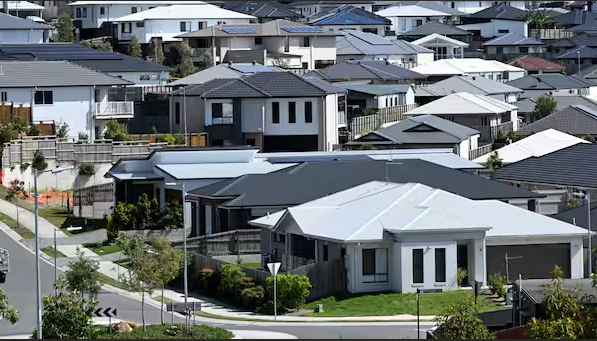
Housing, a basic human right, is now more than ever a tool of profit-making for the wealthy. The working class face an acute emergency, intensified by decades of capitalist exploitation. While the rich amass enormous profits, millions are locked out of secure, affordable housing. This is not a policy failure, it is the inevitable result of a system that prioritises profit over people’s basic needs.
A December 2024 Homelessness Monitor report revealed that rough sleeping has surged by 51 percent since 2020, as critical support services collapse under the weight of the emergency. Workers in full-time employment are increasingly turning to homelessness services, now making up nearly 20 percent of cases. In any rational system, housing would not be a commodity; it should be foundational to a stable and functioning society. Beyond providing shelter, secure and affordable housing enables individuals to thrive, access resources and contribute to their community. Commodified housing fragments communities, deepens inequality, and undermines social relations. When housing is treated as a profit-making asset rather than a social necessity, people are forced into constant movement: chasing lower rents, fleeing eviction, or being priced out by gentrification. This transience makes it harder to form lasting relationships with neighbours, build collective strength, or maintain stable connections with services. As wealthier residents move in and workers are pushed to the outskirts, areas become more sharply divided along class lines.
Realestate.com.au reports that since August 2020, advertised rent prices have surged by 48 percent. Rental vacancies are at 1 percent or lower across the country. Between 2002 and 2024, the house price-to-income ratio has nearly doubled, now averaging nine times the typical household income. For many, the prospect of homeownership has been reduced to a cruel illusion.
Soaring prices and stagnant wages have locked an entire generation out of secure housing. In 2024, Australian property sellers made their biggest profits in over 30 years, according to analysis published by Financial Newswire. The surge in housing prices is not driven by necessity, but by profit-hungry landlords cashing in on a speculative market. Far from being a neutral outcome of ‘supply and demand’, these rising prices are the result of a system engineered for wealth accumulation, not affordability. While millions struggle to find secure housing, landlords and developers are extracting unprecedented welath from the crisis.
A January 2025 Gallup poll found that 76 percent of Australians are dissatisfied with the housing situation, the highest rate among developed OECD countries. The insecurity and pressures are spreading rapidly through the working class, as more people face the harsh realities of housing affordability. From young workers burdened by skyrocketing rents to families unable to access homeownership, the crisis is felt across generations. The fight of workers and youth for affordable, quality housing, against landlords who seek only to extract profit, holds the potential to ignite rising class consciousness and solidarity.
The crisis is not a temporary setback. It is the inevitable outcome of a state that serves only the wealthy. It reflects a deeper contradiction within capitalism: the clash between relentless capital accumulation and the fundamental human need for secure shelter.
This is a battleground of class struggle. True victory lies not in half measures or reforms but in revolutionary transformation, where housing is reclaimed by the working class from the grip of private profit.
Assault on public housing
Governments have systemically reduced public housing through privatisation. From the late 1980s to the mid-1990s, the Hawke and Keating Labor governments cut funding for new public housing, instead favouring private rental subsidies. The Howard government continued this trend by promoting private investment, further diminishing the housing supply. By the time Howard left office in 2007, public housing made up just 4 percent of all dwellings, with the remaining properties allowed to fall into disrepair.
These attacks on housing continue unabated. In August 2024, the Victorian State Government partnered with construction giant John Holland, authorising the demolition of 44 housing towers in Melbourne, leaving 10,000 residents displaced.
Residents facing eviction describe the emotional toll of displacement and an uncertain future. One resident, whose home is one of the first slated for demolition, said, “Raising my family here and being around the community, it means a lot. And to think about the demolition and what that means in the long term, it’s really heartbreaking to think about.” Another resident voiced similar concerns: “I don’t know where I am going to be living or where I might end up, and the government isn’t giving us the information we need to make decisions.”
This public land has been handed to a consortium of private developers. The majority of new apartments will be priced at exorbitant market rates, ensuring windfall profits. These inner suburban areas, coveted for their location, reap massive profits. Wealth has been extracted from the working class and funneled into the hands of investors, deepening inequality and perpetuating the cycle of exploitation. From the 1990s onward, both Labor and Coalition governments slashed public funding for housing in remote Indigenous communities. Under the guise of austerity, these funds were redirected to corporate subsidies and profit-making infrastructure projects. Housing conditions were made unlivable in areas often rich in minerals and resources. This was a deliberate effort to push people off Country, clearing the way for mining corporations to expand their operations. This attack on remote Indigenous housing is not about budget savings, it is about further dispossession and profit.
These government attacks on public housing are part of a broader political strategy to reinforce capitalist control. Governments have consistently embraced profit-driven economic policies, prioritising private investment over public services. It is partly a gift to their capitalist friends: by cutting public housing, the state effectively attacks the workers’ social wage (cheaper housing), forcing them to pay more for rent, diverting money from actual wages to the bosses and landlords. This process ensures an even greater flow of wealth into the hands of the capitalist class. It shifts public resources away from workers and the young, reallocating them to the rich through subsidies and tax incentives.
The reduction of public housing is also a way for governments to free up state funds for other capitalist projects, whether it is infrastructure designed to boost private profits or corporate bailouts that serve the interests of the wealthy. These decisions are made not out of budgetary necessity, but as a deliberate political choice aligned with the interests of the capitalist class. The crisis of housing insecurity is not because of scarcity, but because profits come first.
Gentrification: profit over people
Gentrification, a product of privatisation, forces workers out as more profitable luxury developments flourish, pushing housing prices higher and driving the working class into increasingly precarious situations. This fractures communities. turning them into places of temporary transactions. As capitalists seek profit, social bonds are fragmented, leaving workers and youth increasingly alienated from each other.
Areas scarred by urban decay are left to deteriorate, with crumbling buildings and overgrown spaces common sights. Wealth is concentrated into luxurious enclaves for the rich, while workers and the young are driven out and dumped on the periphery.
In regional towns, rich investors, driven by profit, convert properties into short-term rentals or speculative assets, pushing up rents and property values. This displacement forces long-term residents into precarious living conditions while enriching absentee landlords. In Castlemaine, Victoria, Dhelkaya Health estimated that, in November 2024, 600 people were actively seeking urgent accommodation, with only 20 overpriced rental properties available. Meanwhile, 1,100 homes in the region remain vacant, a clear example of how profit seeking drives housing scarcity.
Historic centres of Indigenous community life have been systemically displaced in the name of profit and gentrification. Coveted inner city land has been sold to the highest bidder for upscale developments. Redfern’s Aboriginal population has significantly decreased over the decades: from an estimated 40,000 in the late 1960s to fewer than 300 in 2017. This decline reflects the displacement pressures faced by Indigenous communities. This process is actively driven by government policies in the interest of capital accumulation. The state funds developers and landlords through tax breaks, subsidies and privatisation. Only by ending the profit-driven control of housing can we put a stop to gentrification. Instead of displacing working-class communities, housing must be planned based on social need, not property speculation. Only in this way can we build stable and healthy communities, where people are no longer uprooted for profit, but supported to live, grow, and thrive together.
The limits of reform
During the post-war period, often held up as a golden age of social reform, capitalism failed to provide adequate housing for all. A massive housing shortage after World War II led governments to act, leading to a public housing boom under the 1945 Commonwealth-State Housing Agreement. While this benefited a layer of workers, it was carried out by the capitalists in order to stabilise social discontent and develop conditions for the expansion of capitalism and profits.
But even at the height of this strategy, housing remained unaffordable and inadequate for many. According to government data in the National Archives of Australia, in 1947, only 26,000 new homes were built nationally, far below the estimated annual need of 50,000-60,000 to catch up and meet ongoing demand. Even at its most ‘generous’, capitalism never guaranteed secure housing for all.
The public housing programs, while significant, were always limited by the broader logic of capitalism, designed to stabilise the system, not to end housing insecurity. This history shows that even when significant reforms and concessions were possible, capitalism could not guarantee housing as a universal right. Today, with capitalism deep in crisis and governments fully beholden to wealthy developers and landlords, even those limited reforms are off the table.
All the major political parties present policies that claim to address the housing crisis, but none offer a break from the profit-driven system that created it. Labor’s Housing Australia Future Fund gambles public money on the stock market instead of building homes. The Coalition relies on tax breaks and raiding workers retirement savings. They only serve to funnel more workers’ money into private hands; fueling speculation and higher profits.
The Greens, calling for more public housing and rent caps, ultimately aim to manage the crisis within capitalism. They do not call for the expropriation of landlords of the end of housing as a commodity- the only lasting solution. Even if public housing is expanded, the construction sector, materials supply chains, and land development processes still involve speculation and profit motive. Their proposals depend on the same state institutions that ultimately serve the interests of the wealthy. If anything, the Greens’ proposals are a useful tool to regulate the discontent of exploited workers, but would inevitably come up against the limits of a system in crisis.
Without breaking from the capitalists entirely, even the most progressive sounding reforms are doomed to fail, due to the severity of the crisis of capitalism.
Only a planned and democratically controlled housing policy, one run by and for the working class, offers the solution. Housing should be built and distributed according to need, not profit. That means expropriating the banks, landlords, and construction monopolies, and putting control of housing and land into the hands of workers’ councils and communities.
The state: enforcer of a class rule
The state is a tool, used by the capitalist class, to actively create and sustain profitable conditions for the exploitation of the working class. The Reserve Bank of Australia (RBA) has played a key role in protecting profits, keeping interest rates low to fuel property speculation and housing price rises. When inflation surged post-Covid19, the RBA sharply raised rates, burdening working class families, while the banks raked in even more profits. Analysis of RBA data from 2019 to 2024, shows the average mortgage repayment had increased by $2,100 per household. In the same period Big Four banks pocketed $145 billion in profits.
Tax concessions for landlords and property developers enjoy support across all the political parties, reinforcing a system that favours the wealthy. Analysis by the Parliamentary Budget Office in June 2024 revealed that property investors will receive $165 billion in tax concessions over the next decade. This corrupt arrangement between landlords and the tax office is a public subsidy to the rich.
The politicians continually send out messaging that home ownership is aspirational; being on the ‘property ladder’ is a mark of success. In his 2022 election campaign, Labor’s Albanese has said on numerous occasions “Home ownership is the great Australian dream”. The Liberals’ Dutton parrots the same phrase. By framing home ownership as the pinnacle of personal achievement, it has obscured the class divisions and contradictions of capitalism in the housing crisis. This narrative presents wealth accumulation as a natural and deserved outcome of individual effort. In reality, housing has become a vehicle for the rich to amass vast welath.
The capitalists use the state to maintain an environment ripe for speculation, where rich landlords profit at the expense of those who need homes.
Scapegoating and class unity
On any given night, more than 100,000 people are homeless in Australia, while the 2021 Census counted over one million vacant homes. The solution is obvious: expropriate the empty homes and house the homeless. There is no genuine shortage, only a system that treats homes as investments for the rich rather than shelter for human beings. Yet the politicians and their media mouthpieces continue to scapegoat working class migrants. In January 2025, The Daily Telegraph declared a ‘migrant surge’ to be a ‘disaster for families’, parroting a broader reactionary narrative. The Liberal Party’s March 2025 Budget response similarly claimed that “Migration will continue to put pressure on housing, infrastructure, and services.”
This is a deliberate lie. The housing crisis is not caused by migrants. It is caused by a capitalist system that allows a wealthy minority to hoard homes as assets, while thousands sleep rough. The same politicians and landlords who decry migration as a ‘burden’ are the ones sitting on an obscene stockpile of empty homes. The scapegoating of migrants is nothing more than a smokescreen; a cynical attempt to divide the working class and deflect blame from the real culprits. The capitalists already have the resources to end homelessness, but their hunger for profit keeps homes locked up and people out on the streets.
The real enemy is not the migrant worker but the landlords and developers hoarding empty homes. Our fight is not with each other, but against a system that prioritises profit over people. Real class unity means rejecting racist scapegoating and turning our anger against the ruling elite that created this crisis.
The only solution: revolution
As communists, it is our duty to expose the housing emergency for what it is: Not a policy failure, but a direct result of capitalism’s insatiable drive for profit at the expense of human need. We must fight against any illusion that reform within this exploitative system is possible. Free, plentiful and high-quality housing will only be won through revolutionary struggle. We demand expropriation without compensation. The banks, developers, and landlords must be stripped of their assets and their wealth and power. Housing must be democratically controlled by the working class, built and distributed based on need- not profit. The thousands of empty homes across this country must be seized and opened immediately.
No evictions.
No rent.
No compromise.